
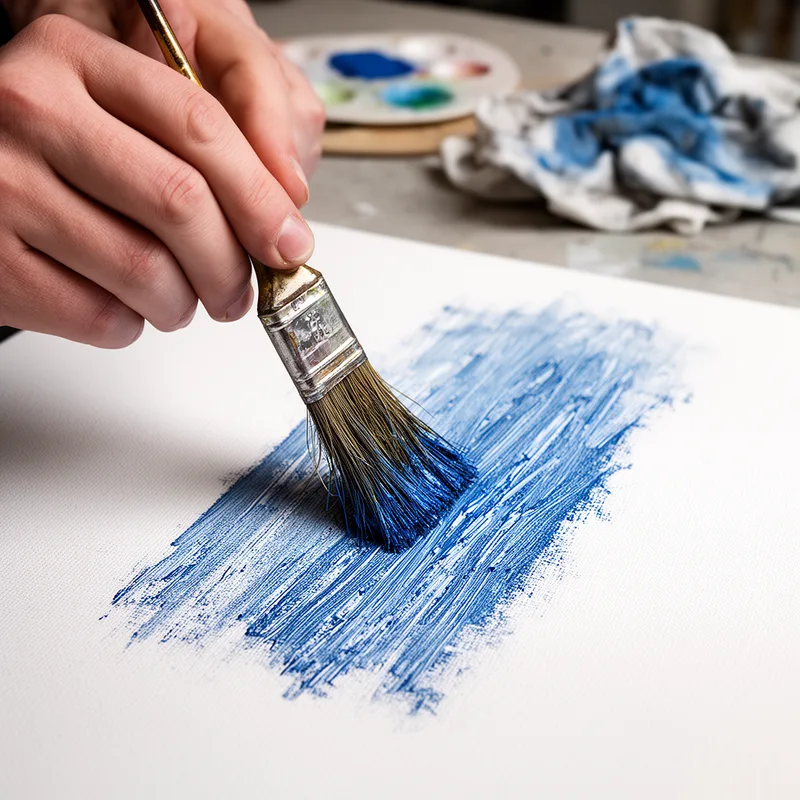
to dry brush
- phrasal verb
- Specialized
- For the best effect, remember to dry brush in sweeping strokes to create depth.
Loading YouTube…
Watch on YouTubeWell, wait till you see, because you can dry brush this on and then just get like a little bit of tone.
- Well, wait till you see, because you can dry brush this on and then just get like a little bit of tone.
Examples
-
We used the black paint to dry brush every other fence slat.
Blog text (12) -
I then dry brushed them with Old White.
Blog text (28) -
Do you think that I can dry brush more than like a week?
-
Well, wait till you see, because you can dry brush this on and then just get like a little bit of tone.
-
So you're you're meant to always dry brush towards your heart.
-
You can achieve a great texture by dry brushing over the base coat with a light hand.
-
When you dry brush the canvas with a light color, it will enhance the details below.
How Textured
- Specialized

 1
3.8
1
3.8

- Specialized
- Specialized
10
6.7
33
4.2
Surface Forms
Morphology
The meaning is directly compositional: 'dry' (lacking moisture or much paint) combined with 'brush' (the action or tool used to apply paint) yields the sense of applying paint with a barely-wet brush to create texture. This is a literal, productively built phrase following normal adjective+verb/tool patterns, so a B1 learner who knows the relevant senses of the constituents will readily infer the meaning.
Etymology
Dry brush as a verb comes from the action of using a dry brush with very little paint or water to lightly drag across a surface so the top parts catch the paint. So to 'dry brush' means to apply paint in thin, textured strokes.