

to draw in
- phrasal verb
- /drɔ ɪn/
Examples
-
After harvesting, as the days drew in, Rufina moved the pen inside.
Fiction book (1993) -
Observe the data line I drew in Figure 10(a).
Academic text (2000) -
Group leaders may need to carefully structure the group and intervene to cut down on monopolizers, draw in those who are silent, and minimize interruptions and hostile and inappropriate remarks.
Academic text (1997) -
The train will draw in at Platform 3 at 10:15 AM.
-
As the scheduled time approached, we could see the train draw in to the station.
-
The announcement alerted passengers that the next train would draw in shortly.
Synonyms

 96
1.3
96
1.3

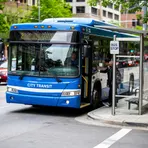
To arrive at a station, like a train or bus
 19
3.1
19
3.1
To arrive at a station and stop there
 5
3.6
5
3.6
To stop a vehicle at a place
Antonyms

How Near
 532
2.1
532
2.1
Surface Forms
Morphology
The meaning 'to attract or engage' is directly derivable from combining 'draw' (to pull/attract) with the directional particle 'in' (toward/into): together they yield the sense 'pull in' or 'bring in' people/attention. This verb+particle composition follows a standard, cross-linguistically common pattern, so a B1 learner who knows both constituents will likely infer the MWE meaning.
Etymology
Draw in comes from the image of a train being pulled into a station platform: draw 'pull' and in 'into the platform', as the train comes alongside and stops. So it means 'to arrive at a station'.