
double refraction
- noun
- /ˈdʌbəl rɪˈfrækʃən/
- Specialized
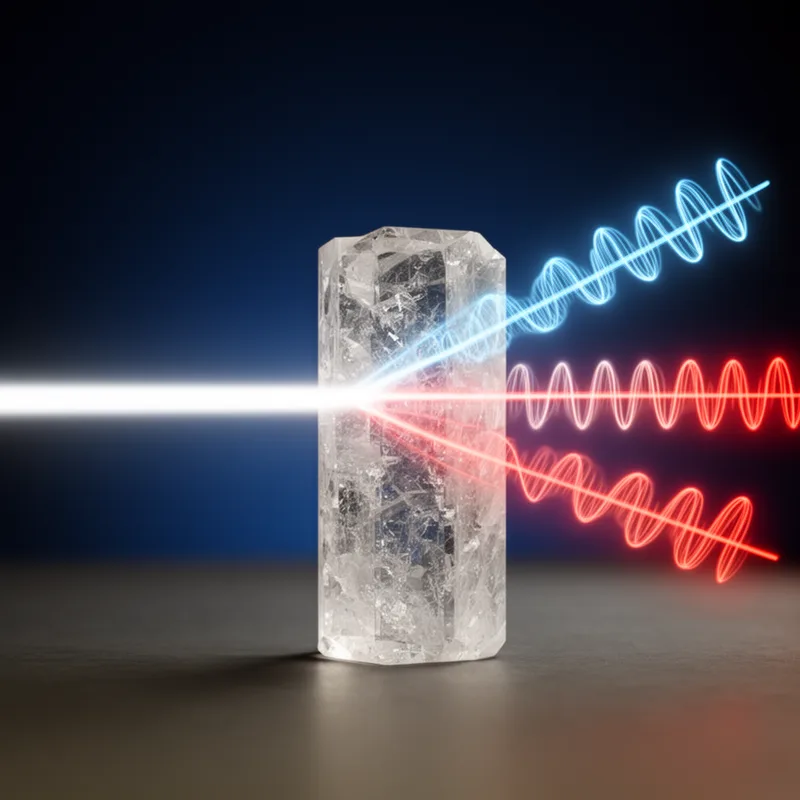
- When light passes through calcite, it undergoes double refraction, creating two beams polarized in different directions.
Examples
-
My book tells me there's only one clear mineral that shows double refraction: calcite (CAL-site).
Fiction book (2001) -
The book says that it is double refraction.
Fiction book (2001) -
It will be capable of singular and double refraction.
Blog text (11) -
The phenomenon of double refraction can be observed clearly when you look through a piece of Iceland spar.
-
Scientists use double refraction to study the properties of certain minerals, allowing them to understand light behavior.
Synonyms


 1
9.9
1
9.9
A feature of some materials that makes light entering them split into two rays at right angles
Surface Forms
Morphology
The term combines 'double' (twofold) with 'refraction' (bending or change of direction of waves), so its core meaning — a refraction that produces two rays — is directly compositional. Although the full technical detail (polarization at right angles) is specialized, a learner who knows both constituents can infer the basic phenomenon, making it transparent.
Etymology
Double refraction comes from a simple picture: when a beam of light enters some crystals it is bent into two separate rays, so you can see a double image. The word double means 'two' and refraction means 'bending of light', so the term names the process of 'one ray splitting into two'.