

domesticable
- adjective
- /dəˈmɛstɪkəbl/
- Specialized
- Some animals, like horses and sheep, are considered domesticable because they can be trained to live alongside humans.
Examples
-
The ability to breed domesticable species has significantly influenced the development of human societies throughout history.
-
This had nothing to do with the nondiffusion of Mediterranean crops, the absence of domesticable plants, or the nonadaptability of tropical crops.
Academic text (1999) -
The ultimate causes are three primordial environmental facts: the shapes of the continents, the distribution of domesticable wild plants and animals, and the geographical barriers inhibiting the diffusion of domesticates.
Academic text (1999) -
Researchers study which plants are domesticable to improve agricultural practices and support human settlement.
Synonyms

Able to be trained to live with people

Can learn to be calm and obey people, for example animals
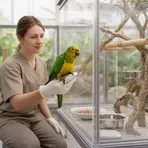
Can live under human care, for example as a pet

Able to change how it works by learning from data
How Tame


Surface Forms
Morphology
Etymology
Domesticable comes from the Latin root domus, meaning 'house', and shares this root with domestic and domicile. So to be domesticable is to be able to live in a 'house' or with people, which is why the word means 'able to be tamed or trained'.