
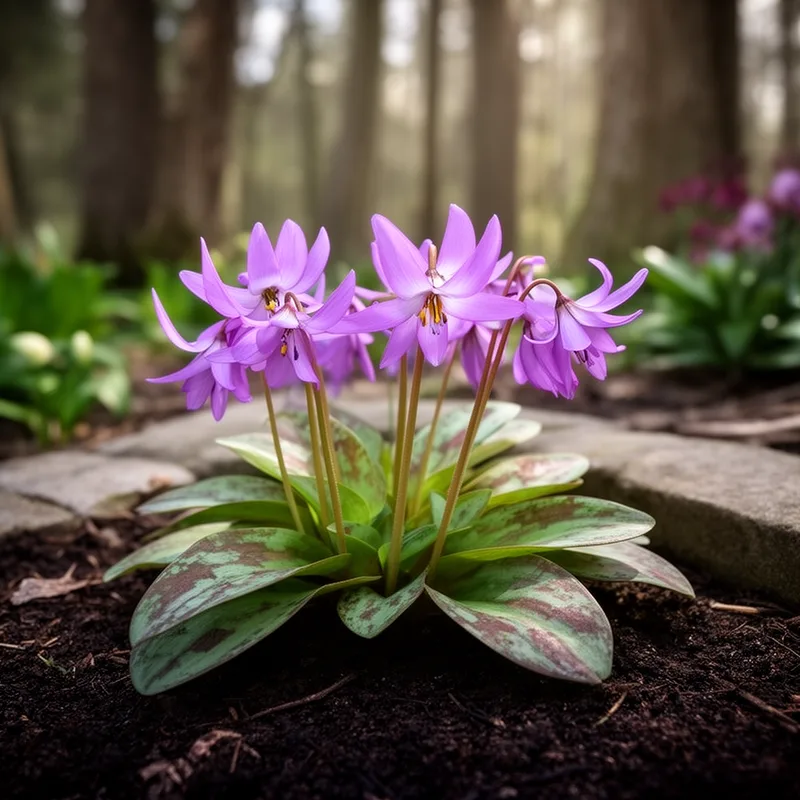
dog's-tooth violet
- noun
- /dɔɡz tuθ ˈvaɪəlɪt/
- Specialized
- In the shaded garden bed, the dog's-tooth violet bloomed early each spring with delicate purple flowers.
Examples
-
She identified the plant as a dog's-tooth violet by its mottled leaves and pointed bulb.
-
I planted some dog's-tooth violets in my garden.
-
Botanists often refer to dog's-tooth violet when discussing woodland wildflowers of North America.
-
The dog's-tooth violet blooms beautifully in spring.
-
In the shaded garden bed, the dog's-tooth violet bloomed early each spring with delicate purple flowers.
-
She identified the plant as a dog's-tooth violet by its mottled leaves and pointed bulb.
-
I planted some dog's-tooth violets in my garden for their beautiful spring blooms.
Synonyms


 1
9.3
1
9.3
A small woodland plant with early spring flowers and broad leaves
 1
9.7
1
9.7
A small woodland plant that flowers in spring with nodding colorful blooms
A small spring flower that grows from a bulb and often has spotted leaves

A small European lily plant that is grown in gardens and has pale pink to mauve flowers

A wild spring flower with bright yellow petals that grows in western North America
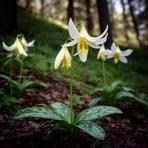
A plant from California in the lily family with creamy white flowers sometimes slightly yellow

A North American spring flower with white petals and a yellow center

A North American woodland plant with one white flower and a yellow center
Surface Forms
Morphology
dog's-tooth + violet
The headword 'violet' clearly signals a type of flowering plant, so a B1 learner who knows 'violet' would likely infer this is the name of a plant. However, the modifier 'dog's-tooth' is an idiosyncratic, metaphorical descriptor whose specific reference (the bulb’s shape / a particular genus) is not predictable from the literal words, so the full referent and nuance are not fully derivable.
Etymology
Dog's-tooth violet probably comes from the plant's small pointed bulb that looks like a dog's-tooth and from its purple, violet-like flower. So the name describes the little bulb and the flower, and that is why people still call this spring plant a dog's-tooth violet.