

dita bark
- noun
- Philippine
- The dita bark tree produces clusters of delicate green-white flowers each spring.
Examples
-
Traditional healers once valued dita bark for its medicinal properties.
-
Researchers are studying the compounds found in dita bark for potential pharmaceutical uses.
-
The dita bark is known for its medicinal properties.
-
Many herbalists use dita bark in their remedies.
-
Researchers are studying the compounds found in dita bark for potential pharmaceutical uses.
-
Traditional healers once valued dita bark for its medicinal properties.
-
The dita bark tree produces clusters of delicate green-white flowers each spring.
Synonyms
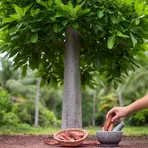
A tall evergreen tree from eastern Asia with large leaves and bark used in medicine

An evergreen tree from eastern Asia and the Philippines with large leathery leaves and bark used in traditional medicine
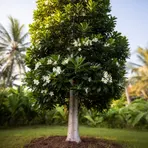
A tall tropical tree from eastern Asia and the Philippines with glossy leaves and small white flowers
Surface Forms
Morphology
This is a straightforward noun+noun composition where knowing 'dita' (a tree) and 'bark' (the outer covering of a tree) allows a learner to infer it refers to the bark of the dita tree, including its medicinal use as stated. The structure and meaning follow common, cross-linguistic partitive/compositional patterns, so a B1 learner who knows the constituents will understand the MWE.
Etymology
Dita bark may come from the name of the small 'dita' tree, where bark is the tree's outer skin. Traditional healers used to strip and boil this bark to make 'medicine', so the name now brings to mind the tree's bark and its use in healing.

