
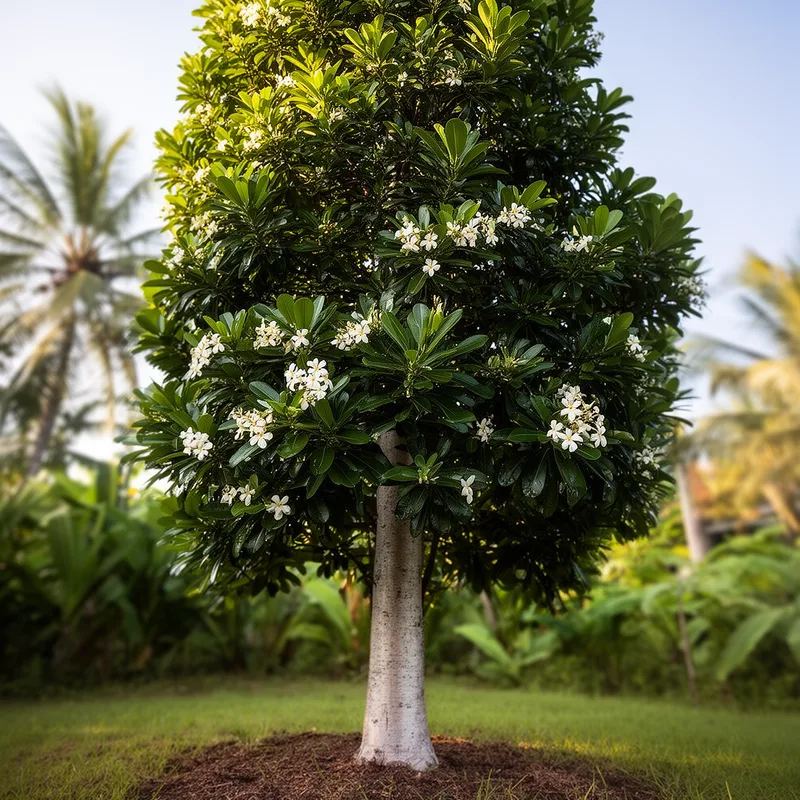
devil tree
- noun
- Indian
- In traditional medicine, the bark of the devil tree has been used to treat various ailments.
Examples
-
The flowers of the devil tree bloom in compact clusters, attracting many pollinators.
-
The devil tree grows abundantly in tropical regions, where its large leaves provide shade.
-
It's a devil tree.
Synonyms

A tall evergreen tree from eastern Asia with large leaves and bark used in medicine

An evergreen tree from eastern Asia and the Philippines with large leathery leaves and bark used in traditional medicine
An evergreen tree from eastern Asia and the Philippines with large leathery leaves and small green white flower clusters
Surface Forms
Morphology
devil + tree
The phrase is compositionally built from 'devil' + 'tree', so a B1 learner who knows those words will infer it denotes a kind of tree and likely expect an ominous or notable association (i.e., a tree called or associated with the devil). However, the specific botanical identity (Alstonia scholaris) and its medicinal properties are not predictable from the constituents, so the relation is only partially transparent.
Etymology
Devil tree may come from old local stories. People saw its dark bark and sticky, bitter sap and thought it was dangerous or home to 'spirits', so they called it the devil tree, and that is why the name is used for this tree today.

