

dispersing phase
- noun
- Specialized
- The properties of a colloid depend on both the dispersing phase and the dispersed phase.
Examples
-
The dispersing phase in an emulsion is typically water.
-
In smoke, air serves as the dispersing phase for solid particles.
-
The dispersing phase in this colloid is water.
-
In many emulsions, the dispersing phase is oil.
-
In smoke, air serves as the dispersing phase for solid particles.
-
The dispersing phase in an emulsion is typically water.
-
The properties of a colloid depend on both the dispersing phase and the dispersed phase.
Synonyms
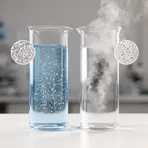
A liquid or gas that holds tiny particles, like air with smoke and water with milk particles
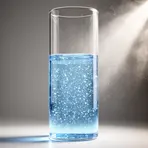
A liquid or gas that has tiny particles spread through it
Surface Forms
Morphology
The compound is compositionally formed ("dispersing" = causing to spread + "phase" = a state or component), so a learner can infer it denotes the phase that carries out or is involved in dispersal. However, the precise technical sense in colloid chemistry — that it is the medium in which another substance is dispersed — requires domain knowledge beyond basic word meanings, so the relation is only partially predictable to a B1 learner.
Etymology
Dispersing phase comes from a simple image: dispersing means 'spreading' and phase means the part or layer doing the work. Imagine a bowl of soup where the broth spreads and carries tiny pieces — the broth is the dispersing phase, so the phrase means the substance that holds and spreads the smaller particles.

