
to disperse
 2
7.4
2
7.4

- verb
- /dɪsˈpɜrs/
- Specialized
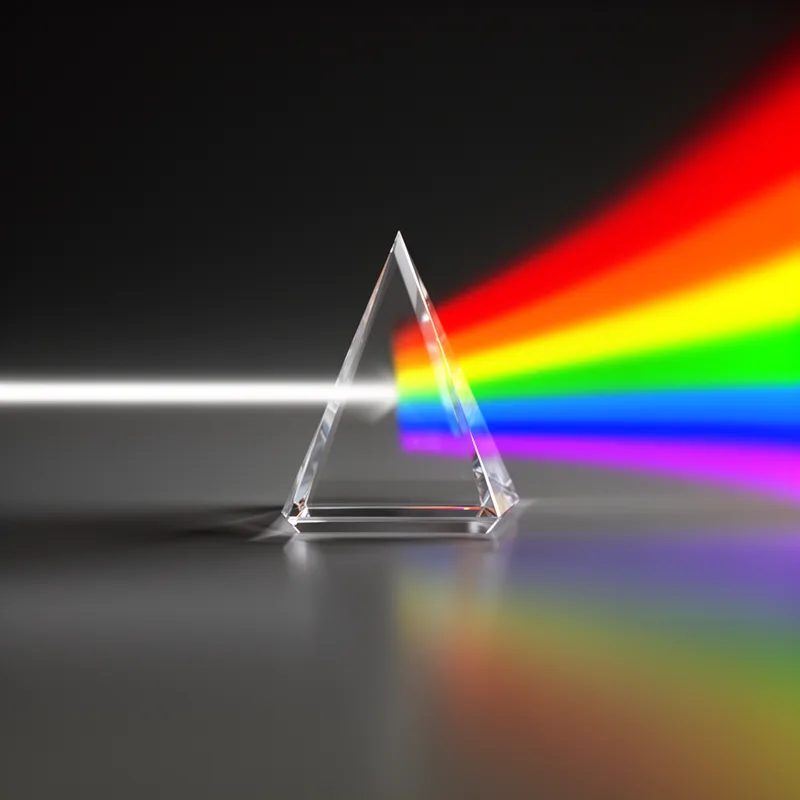
- The glass prism can disperse white light into its various colors effectively.
- disperse light
- prism can disperse
Examples
-
Light was dispersed—for example, by a prism or diffraction grating—and the intensity measured as a function of wavelength.
Academic text (2012) -
And so it refracts in, disperses and those then come out.
-
And so the light is dispersed right in space.
-
By dispersing it, the composition of the incident light can be determined.
Academic text (1996) -
PHOTO (COLOR): Isaac Newton discovered in the mid-17th century that a prism can disperse white light into the colors of a rainbow.
Academic text (2004) -
When sunlight passes through a prism, it will disperse into a rainbow of colors.
-
She used a crystal to disperse the light, creating beautiful patterns on the wall.
Synonyms

To shape an object so it bends light and splits it into colors
How Separated

Surface Forms
Morphology
disperse = sparse (semi-transparent) = dis + sperse
The optical sense ('separate into spectral colors') is an extension of the general idea of separation/scattering (related to 'sparse'), but it is a specialized technical usage and the stem is not a standalone modern base.
Etymology
The word disperse comes from the Latin parts dis- ('apart') and spargere ('to scatter') and shares its root with sparse, which means 'thinly spread'. So to disperse light is to 'scatter apart' its colours, which is why a prism breaks white light into a rainbow.