
disparity
 1
8.5
1
8.5

- noun
- /dɪˈspærɪti/
- Specialized
 :
disparidad
:
disparidad
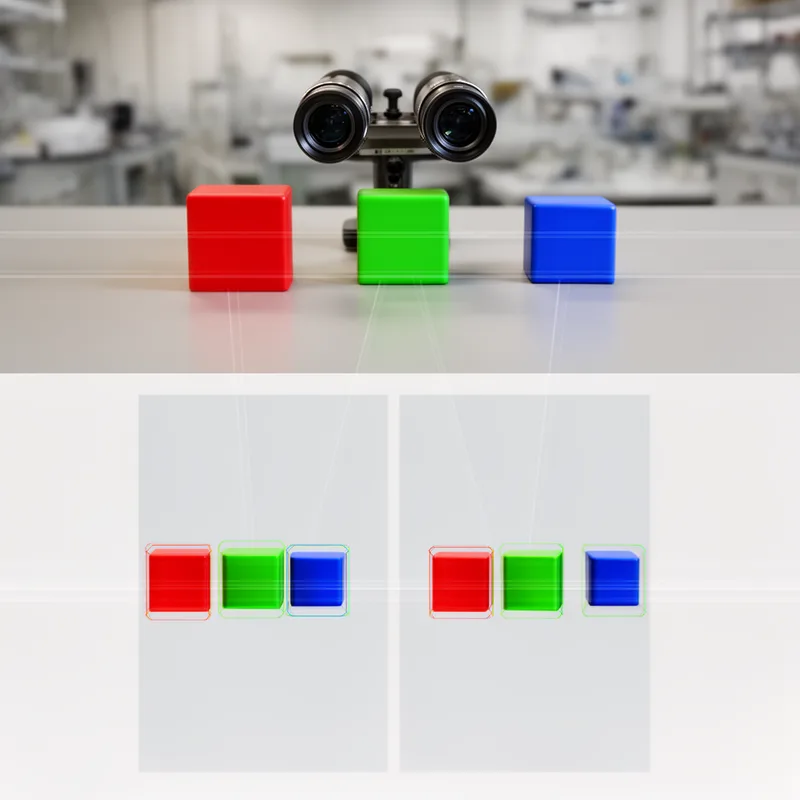
- By measuring the disparity between the two views, the system can estimate how far away an object is located.
- binocular disparity
- disparity map
- disparity measure
And so the vertical disparity provides the constraint.
- And so the vertical disparity provides the constraint.
Examples
-
A stereo pair of 2-D images has been used to establish the disparity measure of corresponding feature points in these images.
Academic text (1995) -
From the disparity information, the object should be contained in the fifth depth region of the perspective map.
Academic text (1995) -
Analysis of the stereo pair yields approximately equivalent disparity information throughout the entire image.
Academic text (1995) -
Note that the binocular disparity has affected the direction of its actual path.
Academic text (2003) -
The movement of the objects from left to right decreased their binocular disparity.
Academic text (2003) -
At these corresponding points, once the disparity is extracted, depth can be derived using simple triangulation.
Academic text (1995) -
The stereo camera captures a horizontal disparity that allows for the calculation of depth in the image.
-
The significant disparity in alignment between the images was crucial for accurate depth perception.
Synonyms
 365
1.7
365
1.7
A difference between two groups or amounts
How Large

Surface Forms
Morphology
Etymology
Disparity comes from Latin parts dis- 'not' and par 'equal', so it originally means 'not equal' or a 'difference'. In stereo vision the word keeps that sense: it is the difference in position between two images, and that difference helps computers and robots judge how near or far an object is.