

disjoined
- adjective
- /dɪsˈdʒɔɪnd/
- And that is the case whenever the sets A&B are disjoined from each other.
Examples
-
According to Nyiri (2007: 5), static images correspond to separate, disjoined words, while motion pictures denote sentences.
Academic text (2018) -
That being the case, since X is not part of Y, there has to be a part of X which is completely disjoined from Y.
-
The piece of A that also belongs in B therefore is disjoined from the piece of C that also belongs to B.
-
The disjoined pieces of the puzzle made it impossible to complete the picture.
-
After the argument, their friendship felt disjoined and strained.
-
The disjoined segments of the report revealed gaps in the overall analysis.
Synonyms

 829
2.1
829
2.1

Not joined to another thing and kept apart
 559
1.0
559
1.0
Become separated into pieces
 3
3.9
3
3.9
Not joined or linked to something else
 2
4.3
2
4.3
Something loose and not fixed to the thing it belongs to
 2
4.2
2
4.2
Not fixed to anything so it can move freely
 1
5.8
1
5.8
Cut off from the rest by a sharp object


 1
4.9
1
4.9
Not joined to something it was attached to before
 1
5.5
1
5.5
Separated at a joint, like a finger or ankle
 1
4.9
1
4.9
Not connected or related to something else, like two separate events
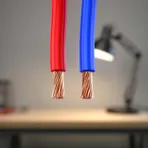
Not connected to another thing, like a beam or wire

Not connected or joined, so parts seem separate

Not physically connected or locked so parts can move apart

Free from any tie and able to move or act freely

Made of separate parts that do not touch each other

A joint forced apart so the bones are not in their normal place
Antonyms
How Separate

Surface Forms
Morphology
Etymology
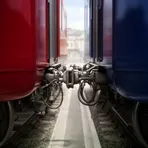
The word disjoined comes from the parts dis- meaning 'apart' and join meaning 'to connect'. So, something disjoined is 'separated' or 'not connected', like train cars that were once joined and are now taken apart.