

discontiguous
- adjective
- /ˌdɪs.kənˈtɪɡ.ju.əs/
- Researchers found several discontiguous fragments of ancient pottery at the dig site.
Examples
-
This plan, often referred to as the "Cuteleiro Plan" or the "Lisbon Plan," allotted to the Serbs 44 percent of discontiguous Bosnian territory in their cantons.
Academic text (1997) -
The core had two sections: Overtown and the discontiguous but larger Liberty City and Brownsville.
Academic text (1992) -
Their political categories and concepts were discontiguous with nationalisms as delineated by Benedict Anderson.
Academic text (2005) -
The two parks are discontiguous, separated by a busy road.
-
In the old town, the discontiguous neighborhoods reflect a mix of architectural styles.
Synonyms

 ∞
1.0
∞
1.0

Not together because of distance, time or different homes
 829
2.1
829
2.1
Not joined to another thing and kept apart
 24
6.1
24
6.1
Separate from other things and clearly different
 5
7.0
5
7.0
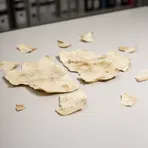
Has small parts that are not whole or joined
 4
5.1
4
5.1
Not in a clear order or logically linked
 3
3.8
3
3.8
A house that stands alone and is not joined to other houses
 1
6.5
1
6.5
Having breaks or gaps, for example a line that stops and starts
 1
5.8
1
5.8
Cut off from the rest by a sharp object


 1
7.9
1
7.9
Placed apart so they are not next to each other
 1
5.5
1
5.5
Separated at a joint, like a finger or ankle

Not touching any other object or surface

Happening with breaks in time or place

Not together with other people, kept apart from them
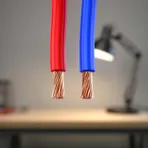
Not connected to another thing, like a beam or wire

Separated so parts are not connected anymore

Not connected or joined, so parts seem separate
Antonyms

How Continuous

Surface Forms
Morphology
discontiguous = contiguous (transparent) = dis + contigu + ous
For learners who know 'contiguous', the prefix 'dis-' straightforwardly gives the meaning 'not contiguous'.
Etymology
Discontiguous breaks into dis- 'not' and contiguous 'touching'. Think of contact, a common word about touch, so discontiguous means 'not touching' or 'separated into different parts'.