
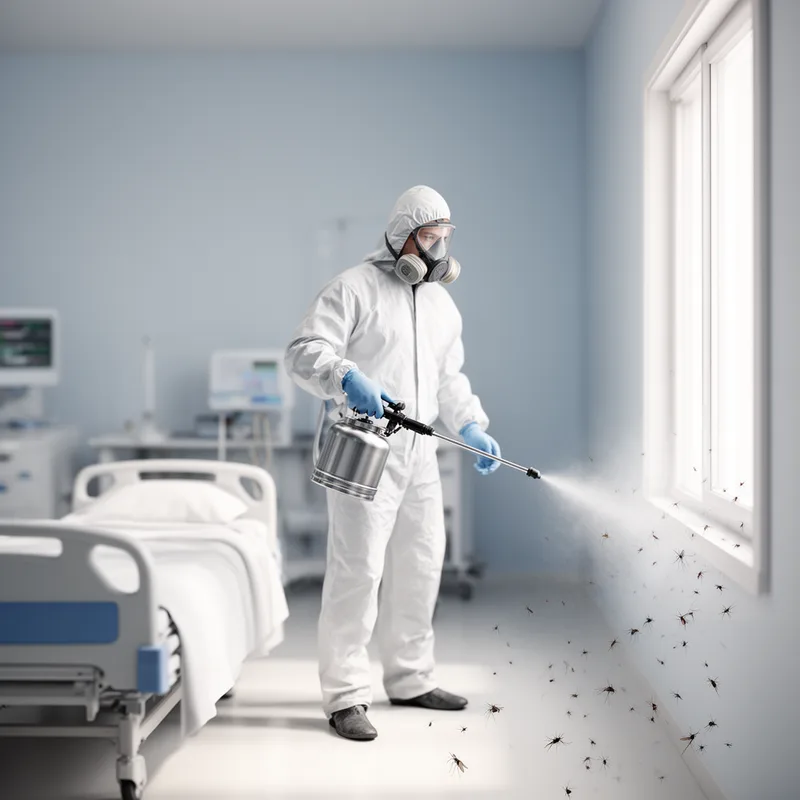
disinsection
- noun
- /ˌdɪsɪnˈsɛkʃən/
- Specialized
- The airline implemented a strict disinsection protocol to ensure the safety of passengers from insect-borne diseases.
Examples
-
The hotel room underwent disinsection before new guests arrived to ensure a pest-free environment.
-
International flights often require disinsection to prevent the spread of insects between countries.
-
Proper disinsection is essential in hospitals to reduce the risk of insect-borne diseases.
-
The disinsection of the building was completed last week.
-
They performed disinsection to prevent the spread of disease.
-
After every flight, the aircraft undergoes disinsection to control any potential insect infestation.
-
To maintain hygiene, the authorities require regular disinsection of public transport vehicles.
Synonyms

 11
2.6
11
2.6

To stop insects and rodents that harm homes, crops or people's health

The removal of unwanted insects and animals from buildings or stored food
Antonyms
 35
5.7
35
5.7
A large number of unwanted insects or animals living in a place and causing damage
How Effective

Surface Forms
Morphology
disinsection = disinsect (semi-transparent) = dis + insect + ion
The noun is a regular action nominalization of 'disinsect', but the technical verb itself is not highly familiar or fully transparent to average learners.
Etymology
Disinsection comes from the parts dis- meaning 'remove' and insect meaning 'bug', so it literally means 'removing bugs'. It is used for the process of getting rid of insects to keep places clean and to prevent disease.