
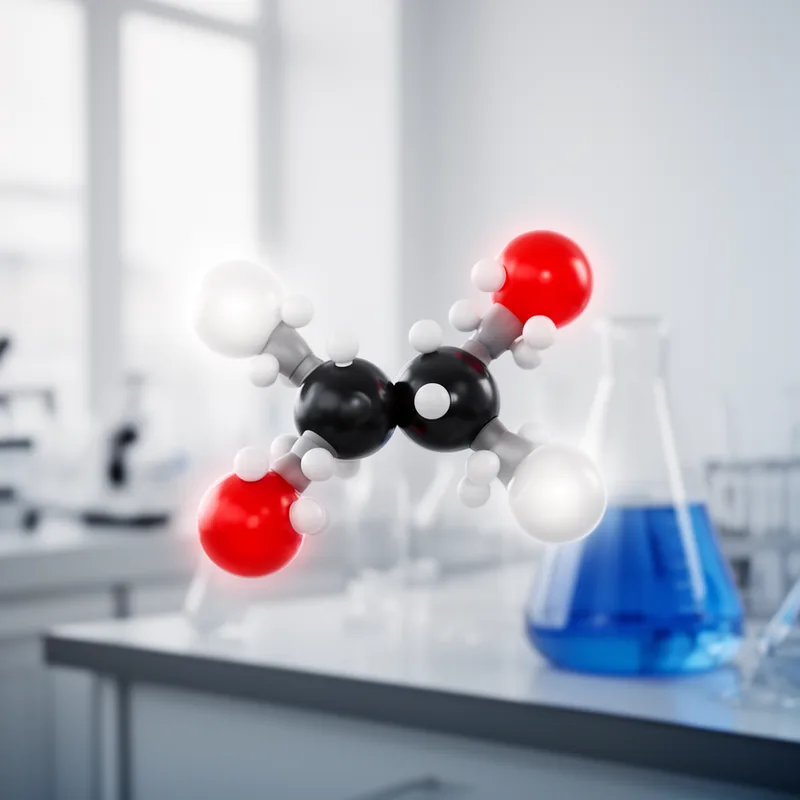
dihydric alcohol
- noun
- /ˈdaɪˌhaɪdrɪk ˈæl.kə.hɔl/
- Specialized
- Ethylene glycol is a common example of a dihydric alcohol used in antifreeze solutions.
Examples
-
The presence of two -OH groups makes a dihydric alcohol more reactive than a monohydric alcohol.
-
Many dihydric alcohols are used in antifreeze formulations.
-
Scientists studied the properties of the new dihydric alcohol in various chemical reactions.
-
A common dihydric alcohol is ethylene glycol.
-
Ethylene glycol is a widely used dihydric alcohol found in car antifreeze and industrial applications.
-
The scientist explained that a dihydric alcohol contains two hydroxyl groups, making it versatile for chemical reactions.
-
In laboratory settings, many experiments utilize dihydric alcohols for their unique chemical properties.
Synonyms

 11
7.4
11
7.4

A clear, thick liquid used as antifreeze and to dissolve things

A chemical that has two OH groups on different carbon atoms
Surface Forms
Morphology
dihydric + alcohol
The term composes a modifier meaning 'dihydric' (two hydric groups) with 'alcohol' (a molecule bearing –OH), so the intended meaning — an alcohol with two hydroxyl groups (a glycol) — follows from the parts. However, 'dihydric' is a technical, morphology-based item (di- + hydric) that many B1 learners will not know or map onto 'two hydroxyl groups' without some domain knowledge, so the relation is only partially predictable.
Etymology
Dihydric alcohol breaks into parts: di- means 'two' and alcohol refers to a chemical with -OH groups. So a dihydric alcohol is a molecule with two -OH parts, also called a 'glycol', and imagining it as a tiny object with two sticky hands helps explain why it reacts more in chemical reactions.