
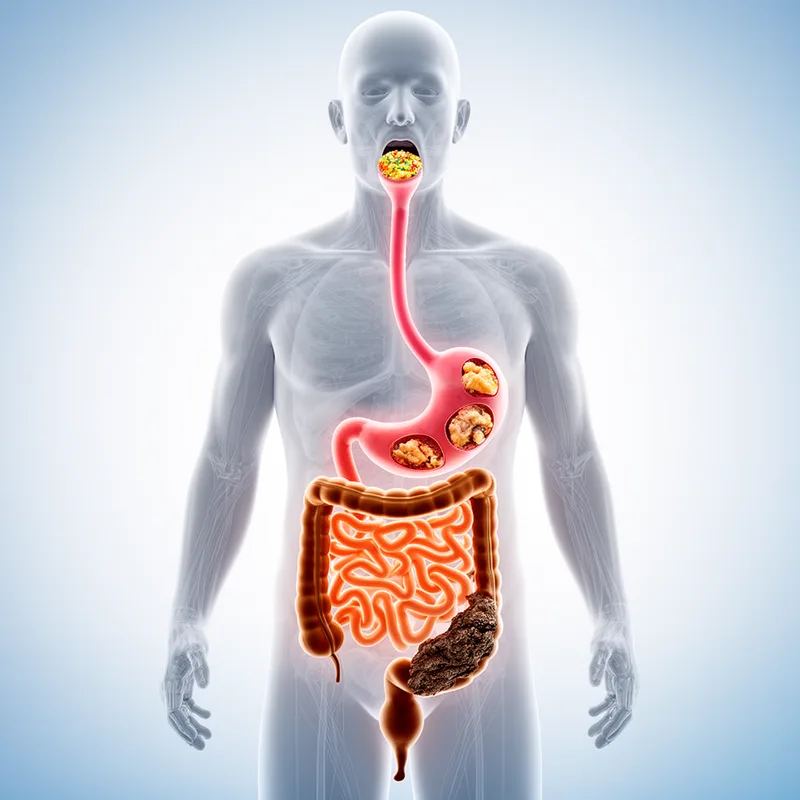
digestive tube
- noun
- /dɪˈdʒɛstɪv tub/
- Specialized
- In some animals, the digestive tube is highly specialized for different diets.
Examples
-
The digestive tube is essential for processing food.
-
The digestive tube is responsible for both digesting food and eliminating waste.
-
Damage to any part of the digestive tube can lead to serious health issues.
-
Many animals have a long digestive tube for better nutrient absorption.
-
The food travels through the digestive tube as it breaks down into nutrients.
-
Doctors study the digestive tube to understand digestion and how the body processes food.
-
After eating, the meal moves along the digestive tube until it is eliminated.
Synonyms

 11
3.4
11
3.4

A long tube made of muscle from the mouth to the anus that breaks down food and removes waste
 3
3.9
3
3.9
A tube in the body from the mouth to the anus where food is digested and waste leaves the body
 2
4.2
2
4.2
The tube in the body from the mouth to the anus that breaks down food and removes waste

A tube in the body from the mouth to the anus that carries food and breaks it down

A long tube that runs from the mouth to the anus and carries food during digestion
Surface Forms
Morphology
The compound is directly compositional: 'digestive' qualifies something as relating to digestion and 'tube' denotes a hollow passage, so a B1 learner who knows both words can infer it is the bodily tube through which digestion/food passage occurs. This follows common noun-noun compounding patterns and has clear cross-linguistic equivalents, so the meaning is immediately recoverable from the parts.
Etymology
Digestive tube paints a simple picture: a long digestive tube running from the mouth to the anus that carries food while the body breaks it down. That's why it means the body passage where food is 'digested' and waste is moved out.