
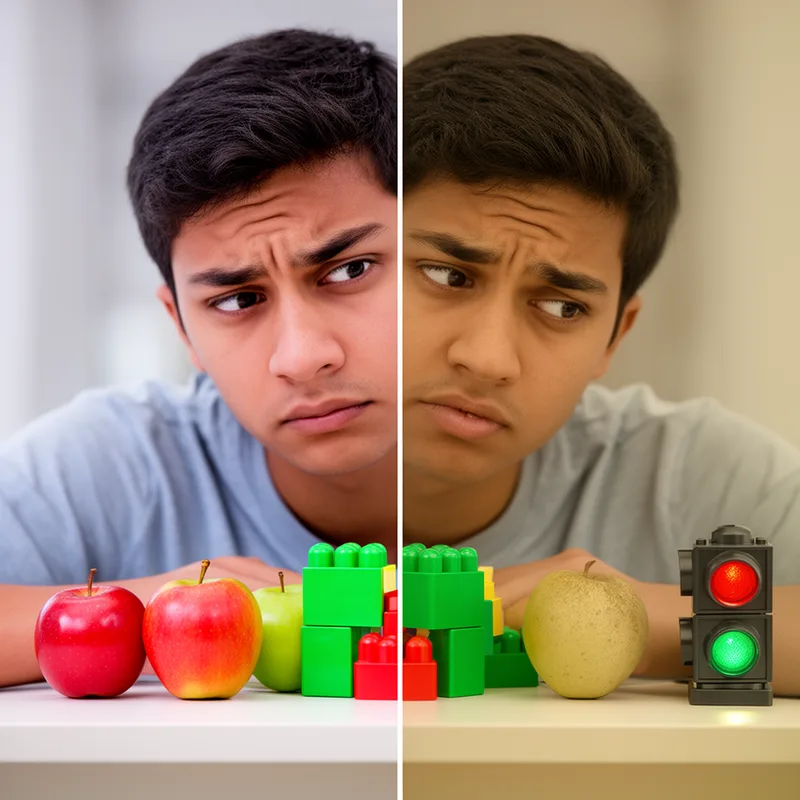
dichromatopsia
- noun
- /ˌdaɪˌkroʊməˈtɑːpsiə/
- Specialized
- Individuals with dichromatopsia usually cannot distinguish between red and green hues.
Examples
-
Some animal species naturally possess dichromatopsia rather than full trichromatic vision.
-
He was diagnosed with dichromatopsia last year.
-
Genetic variations are often responsible for dichromatopsia in humans.
-
People with dichromatopsia often struggle with color differentiation.
-
Individuals with dichromatopsia usually cannot distinguish between red and green hues.
-
People with dichromatopsia often struggle with color differentiation.
-
Genetic variations are often responsible for dichromatopsia in humans.
Synonyms


 1
3.7
1
3.7
Not able to tell some colors, often red and green

A color vision problem where a person sees only two colors and uses two types of light to match others

A condition where a person sees colors with only two types of cells, making red and green hard to tell

A condition in which a person sees colors using only two kinds of light instead of three

A vision condition where a person can match any colour using only two colours of light instead of three
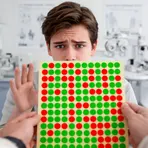
A problem where a person cannot tell some colors apart, often red and green
Antonyms
- Specialized
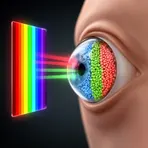
Seeing many colors normally because the eyes have three kinds of color cells
How Complete

Surface Forms
Morphology
dichromatopsia = dichromat (opaque) = di + chromat + opsia
The step from 'dichromat' to 'dichromatopsia' follows a regular medical pattern where '-opsia' denotes a visual condition, but this is specialized vocabulary not familiar to general learners.
Etymology
Dichromatopsia breaks into three parts: di- 'two', chrom 'color' like in monochrome, and -opsia 'seeing' like optical. So, dichromatopsia is a condition of 'seeing' with only two types of color receptors, which is why people with it have limited color vision.