
diastrophic
- adjective
- /ˌdaɪəˈstrɒfɪk/
- Specialized
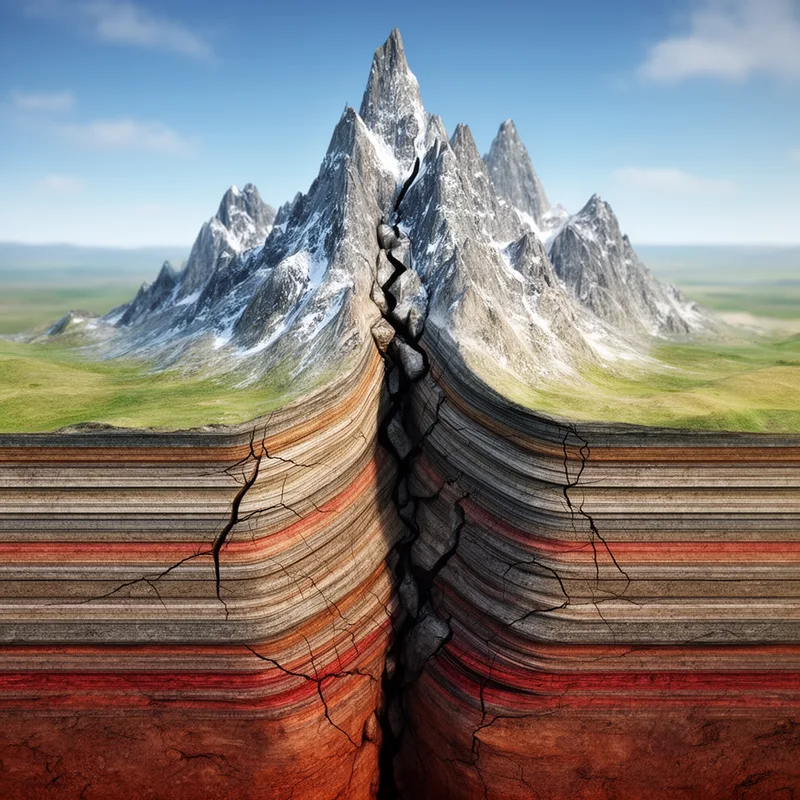
- The diastrophic forces shaped the mountain range over millions of years.
Examples
-
Geologists study diastrophic changes to understand how continents shift and mountains form.
-
The Himalayas are a result of diastrophic processes over millions of years.
-
Earthquakes can be caused by diastrophic movements deep within the planet's crust.
-
Geologists study diastrophic processes to understand Earth's history.
-
The Himalayas are a result of diastrophic processes over millions of years.
-
Geologists study diastrophic changes to understand how continents shift and mountains form.
-
Earthquakes can be caused by diastrophic movements deep within the planet's crust.
Synonyms

 18
7.2
18
7.2

Relating to the movement and shape of the Earth's crust that cause earthquakes and mountains
 8
6.9
8
6.9
The arrangement of rock layers and faults in the earth's crust
Surface Forms
Morphology
diastrophic = diastrophism (opaque) = diastroph + ic
Although related to the noun 'diastrophism', the adjective uses a technical combining form that is not transparent to general learners.
Etymology
Diastrophic comes from Greek parts dia- meaning 'through' and stroph meaning 'turning'. In geology, a 'diastrophic' change is when the Earth's crust bends or 'turns'—this sense of large deformation explains why the word describes folds, faults, and mountain building.