
diastase
- noun
- /ˈdaɪəˌsteɪs/
- Specialized
- Mucicarmine and periodic acid Schiff stains with and without diastase were negative, confirming that the vacuolated clear cells were neither mucinous nor glycogen-rich squamous cells.
- diastase enzyme
Examples
-
Mucicarmine and periodic acid Schiff stains with and without diastase were negative, confirming that the vacuolated clear cells were neither mucus cells nor glycogen-rich squamous cells.
Academic text (2007) -
Acini have been reported to stain positive for mucin by the diastase/periodic acid-Schiff method.
Academic text (2006) -
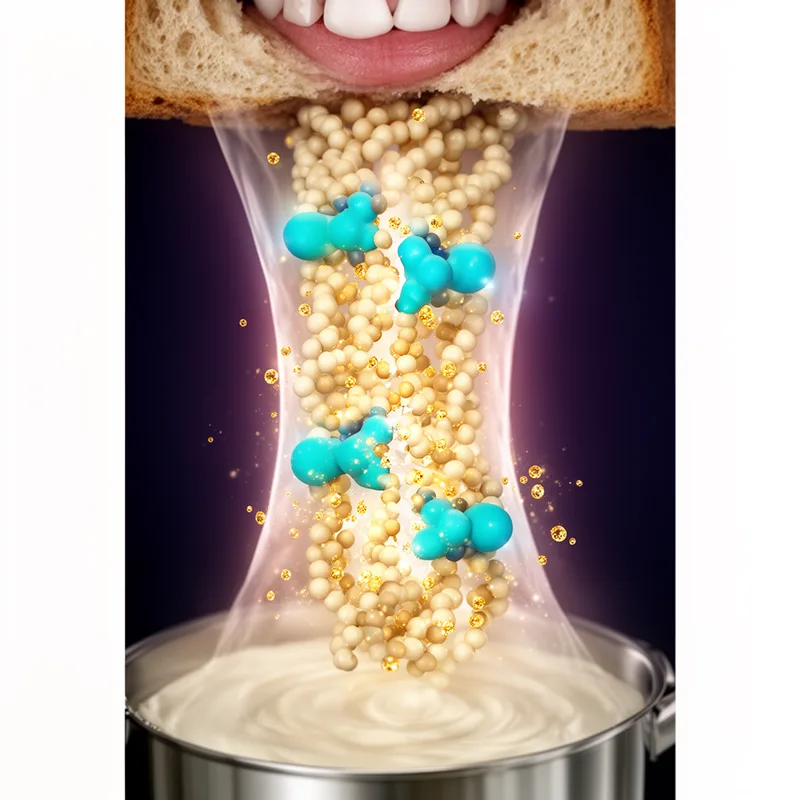
The enzyme diastase helps break down starches into sugars during digestion.
-
In bread making, diastase is used to convert starches in flour into maltose for fermentation.
-
The presence of diastase in the digestive system aids in the efficient processing of carbohydrates.
Synonyms
 4
5.4
4
5.4

An enzyme in saliva and the pancreas that breaks starch into sugar
Surface Forms
Morphology
diastase = diast + ase
The suffix '-ase' clearly signals an enzyme (so readers may guess it's an enzyme), but the root 'diast-' is not a recognizable standalone English base for most learners and does not transparently indicate 'breaks down starch'.
Etymology
Diastase comes from the Greek word diastasis, which means 'separation'. It was named because the enzyme 'separates' starch into sugar, so it helps the body break down starchy foods.