

amylase
 4
5.4
4
5.4

- noun
- /ˈæmɪleɪs/
- Specialized
- Water and mucin, in addition to enzymes such as amylase, ribonuclease, and lipase, initiate the digestion of food by lubricating it and dissolving it into particles.
- salivary amylase
- Alpha-amylase
- amylase and lipase
Examples
-
Our pancreases secrete both digestive amylase (for plant starch) and elastase (for the specifically animal protein elastin).
Blog text (15) -
There's a reason why we have more of the starch enzyme amylase in our saliva than any other primate.
Blog text (28) -
Actually, people have alpha amylase in their saliva, which is why if you chew grains long enough, they will taste a little bit sweet.
-
The presence of amylase in saliva is essential for the initial digestion of carbohydrates in the mouth.
-
When you chew bread, amylase in your saliva begins to convert the starch into sugar, giving it a sweet taste.
-
Amylase is an enzyme present in saliva that helps break down starch into sugar during digestion.
Synonyms

A substance in saliva that breaks starch into sugar when you eat
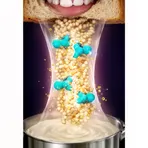
An enzyme that breaks starch into sugar during digestion and in food processing
Surface Forms
Morphology
Etymology
Amylase comes from the part amyl- meaning 'starch' and the ending -ase meaning 'an enzyme' or 'a substance that breaks things down'. So, amylase is an enzyme that breaks starch into sugar.