
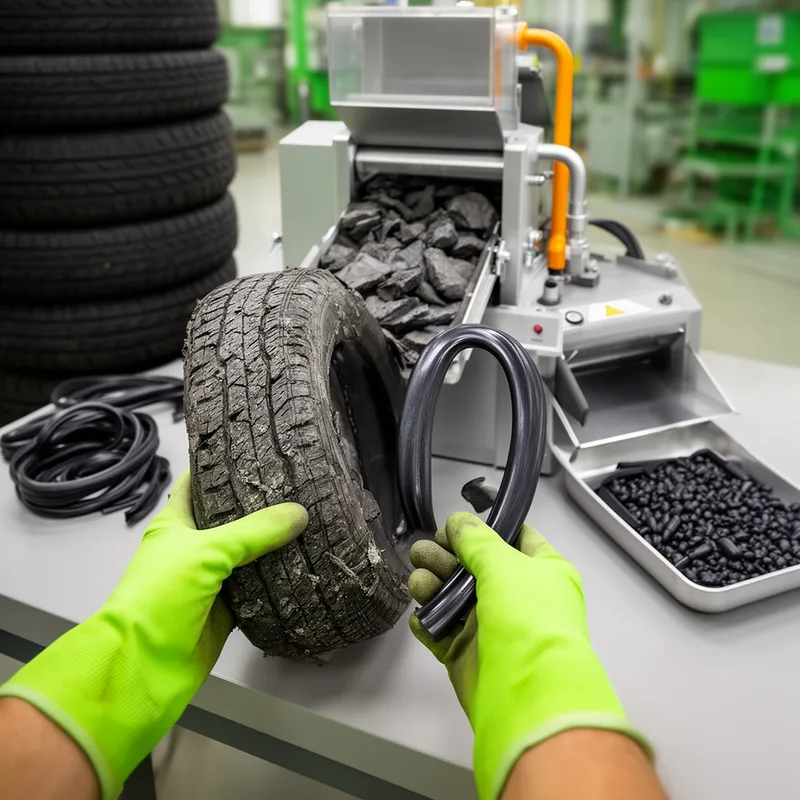
devulcanization
- noun
- /dɪˌvʌl.kə.nɪˈzeɪ.ʃən/
- Specialized
- The engineers focused on devulcanization to recycle rubber and use it for new products.
Examples
-
Recent developments in devulcanization by chemical, ultrasound, and biological techniques are very promising.
Academic text (2001) -
We are optimistic that technological innovations, particularly devulcanization of tire rubber, will create markets.
Academic text (2001) -
Providing greater support for research and development of devulcanization and other technological innovations for recycling tire waste; 5.
Academic text (2001) -
Research into devulcanization techniques is essential for developing sustainable rubber recycling methods.
-
Recent developments in devulcanization by chemical, ultrasound, and biological techniques are very promising.
Synonyms

 6
2.7

The process of becoming softer or less firm
Making plastic softer so it can bend or be shaped
Antonyms
- Specialized

 1
8.4
Treating rubber with heat and sulfur to make it stronger and more elastic
Surface Forms
Morphology
devulcanization = vulcanization (semi-transparent) = de + vulcanize + ation
The prefix 'de-' productively marks reversal of the process 'vulcanization', so the relation to the immediate base is clear.
Etymology
Devulcanization starts with de- meaning 'remove' and the rest comes from vulcanize, which is named after Vulcan, the Roman god of fire, and is like volcano. Since vulcanize meant 'use heat to make rubber hard', devulcanization means 'to undo' that process so the rubber becomes soft and can be used again.