
vulcanization


 1
8.4
- noun
- /ˌvʌlkənaɪˈzeɪʃən/
- Specialized
- At different times in different places, but for the Amazon, the decade of the 1850s seems the logical choice, ushered in by Charles Goodyear's accidental discovery of vulcanization and the initiation of regular steamboat services on the Amazon in 1853.
- vulcanization of rubber
Examples
-
Possible methods include the maintenance of human cartilage and the vulcanization of rubber compounds into articulating surfaces.
Academic text (1990) -
Midrange hoses are cured by steam vulcanization.
Academic text (1999) -
After gross physical testing of each foot for flexibility and complete vulcanization, dorso-ventral and lateral radiographs were taken.
Academic text (1990) -
Rubber compounds for vulcanization were the same as those used for tire retreading and were procured locally.
Academic text (1990) -
Chemical treatment of NRL or vulcanization for tire production is likely to produce residual and neo-allergens in the finished products that may cross-react with a number of proteins (Kurup & Fink, 2001).
Academic text (2004) -
In the realm of technology, Indians first developed the vulcanization of rubber, the bulb syringe, snowshoes, etching with acid, and an air furnace for melting ore at high altitudes.
Academic text (1991) -
Vulcanization improves the strength and durability of vulcanization products.
-
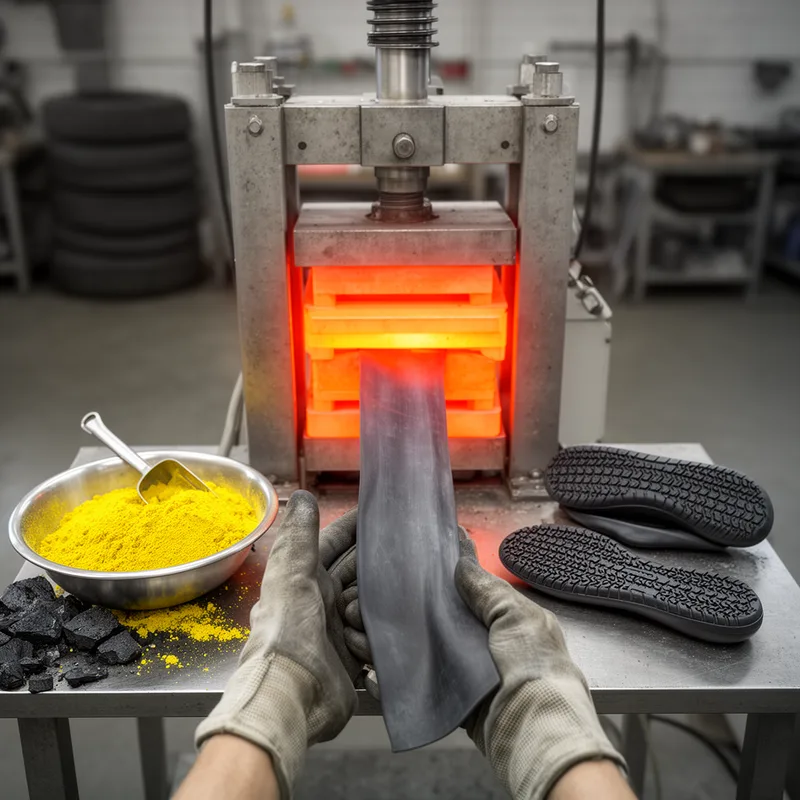
The vulcanization process involves treating rubber with sulfur at high temperatures.
-
Many manufacturers rely on vulcanization to create high-quality rubber materials.
Surface Forms
Morphology
Etymology
Vulcanization comes from Vulcan, the Roman god of 'fire', and the word is like volcano, which gives the image of heat and sulfur. That's why vulcanization means treating rubber with heat and sulfur to make it stronger and more elastic.