

deprotection
- noun
- /ˌdiːprəˈtɛkʃən/
- Specialized
- In chemical synthesis, deprotection is the essential step that removes the protective group to reveal the active site.
- acid-catalyzed deprotection
- deprotection reaction
- catalyzed deprotection
Examples
-
Because deprotection can occur at room temperature in this system, a PEB is not essential for imaging.
Academic text (2001) -
At the highly exposed region of the film, close to the air-film interface, the acid concentration is high, causing deprotection to proceed rapidly, quickly reaching 100% deprotection.
Academic text (2001) -
The rate of the deprotection reaction is an increasing function of the concentration of acid.
Academic text (2001) -
The data in Figure 8 indicate that the contribution of the deprotection chemical processes to image spreading is a constant fraction of the image size.
Academic text (2001) -
Part (a) shows the predicted evolution of deprotection for the standard case in which no base was added to the resist film.
Academic text (2001) -
The deprotection kinetics are correctly predicted using the PN model.
Academic text (2001) -
The mobility of PFBS-A decreases sharply as the polymer undergoes deprotection.
Academic text (2001) -
Consideration of the limiting case in which diffusion is negligible highlights the role deprotection kinetics play in image spreading.
Academic text (2001) -
Within each subfilm, the full set of thermal and acid-catalyzed deprotection reactions can take place, and transport of the acid can occur between adjacent subfilms.
Academic text (2001) -
In contact with an aqueous alkaline developer, the carboxylic acid groups formed during deprotection will ionize, rendering the polymer soluble in the aqueous solution.
Academic text (2001)
Synonyms
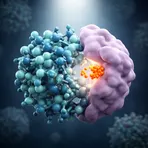
Removing a small chemical group called acetyl from a molecule

The process of removing a small chemical part called a methyl group from a molecule

Removing a small nitrogen part from a protein building block or similar chemical
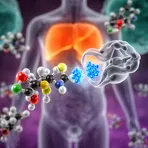
A process that removes an amino group from an amino acid in the body

A chemical change that removes or alters an amide group in a molecule, often a protein
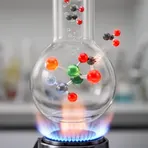
Removal of a small part from a molecule that releases carbon dioxide and changes it
Antonyms



Surface Forms
Morphology
deprotection = deprotect (semi-transparent) = de + protect + ion
Adding '-ion' to the verb 'deprotect' straightforwardly forms a noun meaning the act or process of deprotecting.
Etymology
Deprotection starts with de- meaning 'remove' and the word protect meaning 'to keep safe'. In chemistry it is like taking off a coat that was protecting a part of a molecule so that part can react. So deprotection is the process of removing a protective group.