
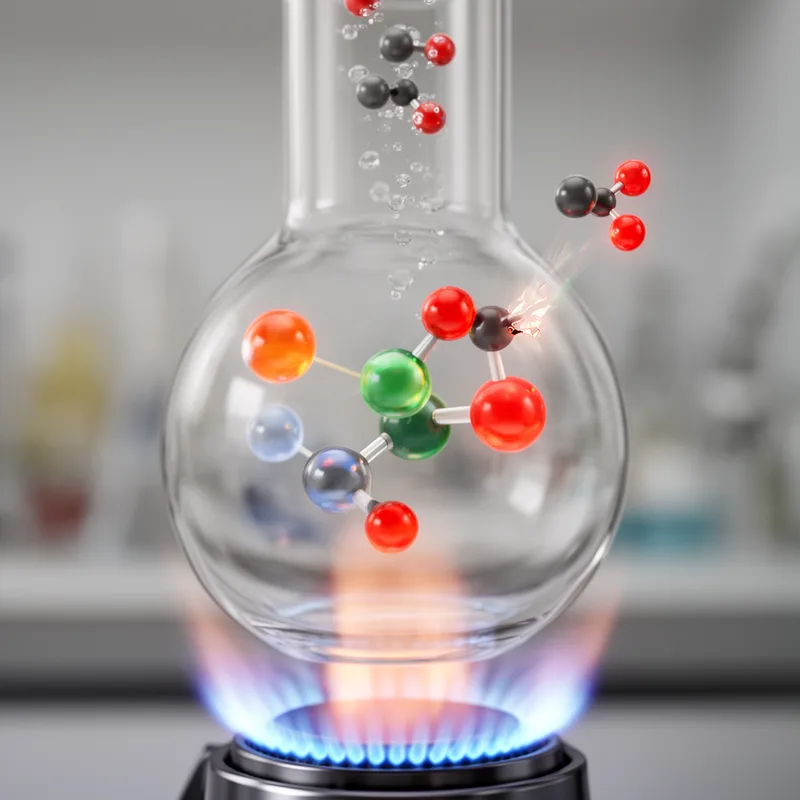
decarboxylation
- noun
- /ˌdiːkɑːrˌbɒksɪˈleɪʃən/
- Specialized
- Many plants undergo decarboxylation to convert organic acids into gaseous carbon dioxide as a part of their metabolic processes.
Examples
-
Right, which results in decarboxylation when we heat it, right?
-
So to generate ethanolamine, it's decarboxylation of serine to do that.
-
And so there's a cofactor that facilitates the chemistry that allows decarboxylation of alpha ketoacids.
-
The decarboxylating enzyme and subcellular localization were difficult to predict; however, the authors estimated that decarboxylation did not occur in the P. tricornutum plastid.
Blog text (18) -
However, nematodes may be the only members of the animal kingdom that can bypass a decarboxylation step of the TCA cycle via an alternative metabolic process—the glyoxylate pathway.
Academic text (2017) -
In the presence of heat, the process of decarboxylation caused the compound to release carbon dioxide.
-
The decarboxylation of glutamic acid results in the formation of several important biochemical compounds.
Surface Forms
Morphology
decarboxylation = decarboxylate (transparent) = de + carboxyl + ation
Given knowledge of the verb 'decarboxylate', the noun in '-ion' straightforwardly names the process.
Etymology
Decarboxylation breaks into de-, the same 'de-' you see in 'deactivate' meaning 'remove', and carboxyl, a 'carbon plus oxygen' part of a compound, so the word gives the image of taking a carbon piece away. That's why decarboxylation is the chemical step when a 'carboxyl' group leaves and often makes 'carbon dioxide'.

