
dentin
 1
7.5
1
7.5

- noun
- /ˈdɛntɪn/
- Specialized
- The current study evaluated the effects of SMB-loaded gel on the bond strength of the resin and dentin of teeth previously submitted to bleaching treatment.
- exposed dentin
- strength of the dentin
- dentin of teeth
Examples
-
If a cavity forms, sometimes the dentin will give us a clue that there is a problem.
Blog text (22) -
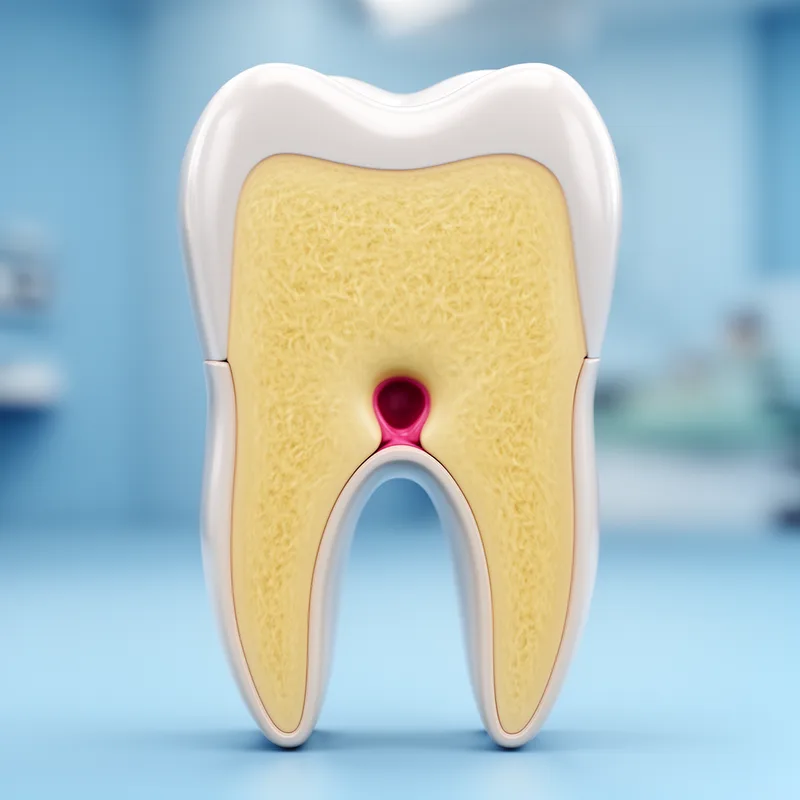
The dentist explained that dentin makes up the bulk of the tooth and is crucial for its integrity.
-
When a cavity forms, the dentin will try to repair the area by creating more dentin.
Blog text (22) -
If enough enamel is broken off, the dentin could become exposed, which leads to tooth sensitivity.
Blog text (33) -
The null hypothesis tested was that the use of SMB does not influence the bond strength of the dentin of bleached teeth.
Academic text (2018) -
In addition, an in vitro study revealed a greater diffusion of peroxide into the dentin of a restored anterior tooth.
Academic text (2018) -
The dentin beneath the enamel provides strength to the tooth structure.
-
When a tooth is damaged, the dentin can become exposed and sensitive to temperature changes.
How Hard


Surface Forms
Morphology
dentin = dent (semi-transparent) = dent + in
Formed from the combining root 'dent-' (tooth) plus the substance‑forming suffix '-in'; learners familiar with 'dentist'/'dental' can infer 'tooth tissue', but the Latin combining form is somewhat technical for average B1 learners.
Etymology
Dentin comes from the Latin root dent- meaning 'tooth', the same root you see in dentist and dental. Dentin is the hard tissue under the enamel, so the name reminds you that it is the inner 'tooth' material.