
dendrochronology
 1
9.9
1
9.9

- noun
- /ˌdɛn.drə.kroʊˈnɑː.lə.dʒi/
- Specialized
- Rasmi's team learned this at Jabo Cave, about 10 miles as the crow flies from Ban Rai, when a colleague drilled small holes into coffins to collect samples for dendrochronology.
- dendrochronology dating
- dendrochronology tree rings
- dendrochronology date
Examples
-
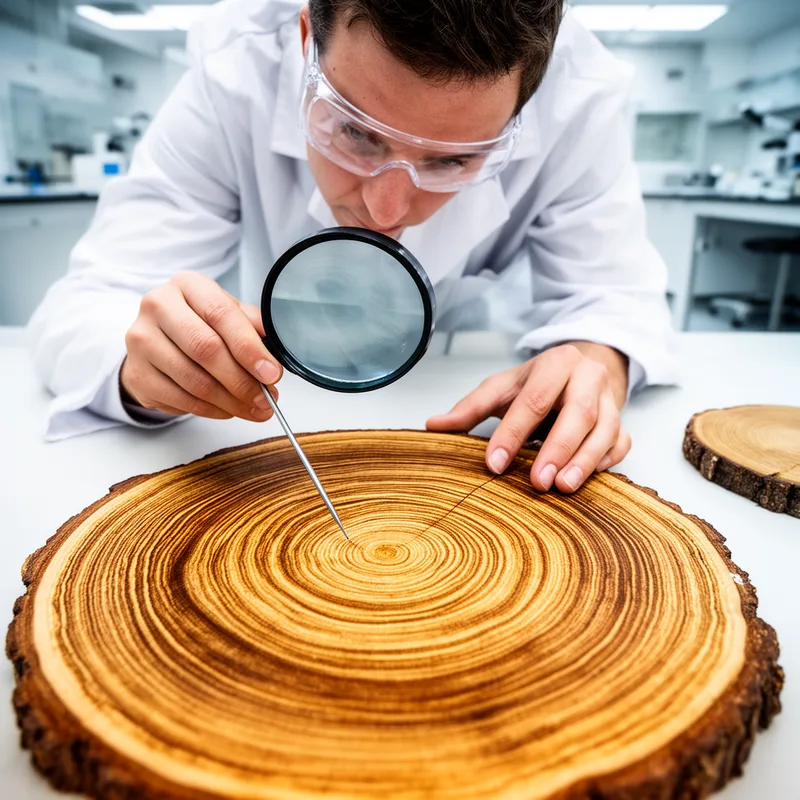
Researchers use dendrochronology to determine the age of ancient trees by examining their growth rings.
-
Is that generally true of the use of dendrochronology as a temperature proxy by climate scientists?
Blog text (17) -
Furthermore, dendrochronology is in agreement with other dating methods.
Blog text (14) -
Dendrochronology has shown that the timbers, the lower parts of which survived, dated to approximately 95 B.C.
Academic text (2011) -
Dendrochronology now suggests that it was built not in southern Scandinavia, as was previously thought, but in or near Dublin between 1060 and 1090.
Academic text (1996) -
Dendrochronology, dental analyses, and DNA were all undertaken to study the age of the coffins and their occupants, and further analysis examined the styles in which they were carved.
Academic text (2009) -
By the time excavation began in August 1998, our team included researchers from Kazakhstan, France, Italy, Belgium, and Russia working in fields as varied as geomorphology, paleobotany, and dendrochronology.
Academic text (2002) -
The study of dendrochronology has revealed significant changes in climate over the centuries as reflected in tree rings.
-
By analyzing the patterns in tree rings, scientists can apply dendrochronology to date historical events accurately.
How Accurate
- Specialized
1
9.9

- Specialized
5
3.8
18
3.3
1
3.3
Surface Forms
Morphology
dendrochronology = chronology (semi-transparent) = dendro + chronology
Formed by adding the scientific combining form 'dendro-' (tree) to the existing word 'chronology'; the structure is clear to those familiar with scientific prefixes but 'dendro-' is specialized and may not be known to average learners.
Etymology
The word dendrochronology comes from Greek parts dendro- 'tree', chron- 'time', and -logy 'study'. So, dendrochronology is literally the 'study of tree time', where scientists count a tree's rings to find the year of events and to study past climate.