

deistic
 1
9.7
1
9.7

- adjective
- /diˈɪstɪk/
- The Pope does not constrain science, nor should science organizations limit religion to its most deistic and non-overlapping forms.
- deistic center
- deistic god
Loading YouTube…
Watch on YouTubeHe then says that this has to be transcendent and deistic.
- He then says that this has to be transcendent and deistic.
Examples
-
Weber saw in both ascetic Protestantism and Deistic reason the roots of those natural and self-evident rights upon which the modern world order is based.
Academic text (1991) -
The only possible exception is the concept of a deistic god.
Blog text (26) -
Some believe in God in a deistic or pantheistic way.
Academic text (2007) -
Most of these have a view that could be called deistic or agnostic; they concede at least the remotely possible existence of a deity or deity-like creator, but they believe that this entity has no connection with us.
Academic text (2007) -
Any argument you muster against the plausibility of His existence, any points you make about the contradictions inherent in a God both deistic and revelatory, simply won't cut ice with true believers.
Academic text (2001) -
Many Founding Fathers of the United States were influenced by deistic ideas in shaping their beliefs about government.
-
The philosopher's writings reflect a deistic view, emphasizing reason and nature as pathways to understanding the divine.
-
In discussions of religion, some people advocate for a deistic approach, proposing that God created the universe but does not intervene in it.
Synonyms

Relating to the belief that God made the world but does not control it
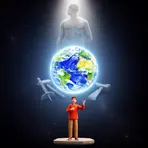
Believing that a creator made the world but does not act in it
How Theistic

Surface Forms
Morphology
Etymology
Deistic comes from deism, which comes from the Latin root deus meaning 'god', the same root as in deity. So, deistic describes beliefs about a 'god' who made the world but does not interfere.