
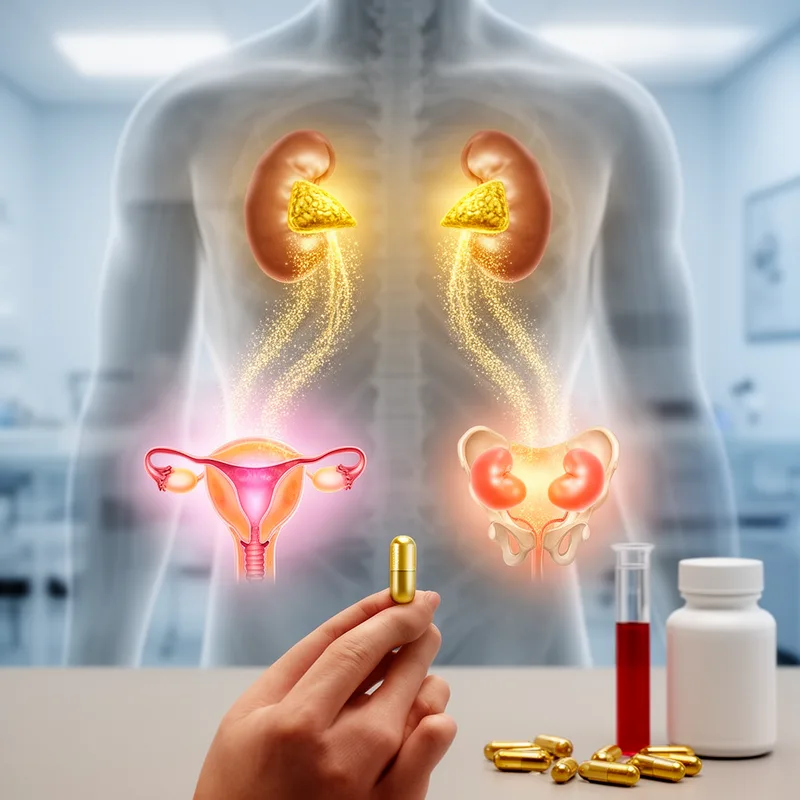
dehydroepiandrosterone


 1
9.9
1
9.9
- noun
- /ˌdiːhaɪdroʊˌɛpiˌændrəˈstɛrən/
- Specialized
- In symptomatic women with peri- or postmenopausal symptoms, dehydroepiandrosterone did not improve menopausal symptoms and resulted in increased androgenic side effects compared with placebo or no treatment.
- dehydroepiandrosterone (DHEA)
- dehydroepiandrosterone in postmenopausal
Examples
-
Practicing selfless service with gratitude also increases our levels of the feel-good hormones prolactin and dehydroepiandrosterone.
Blog text (23) -
The main outcome measures were SHBG and sex hormones, i.e., testosterone, estradiol, dehydroepiandrosterone sulfate.
Blog text (20) -
Dehydroepiandrosterone for women in the peri- or postmenopausal phase.
Academic text (2015) -
In women with peri- or postmenopausal symptoms, is dehydroepiandrosterone (DHEA) effective and safe for improving symptoms?
Academic text (2015) -
Elevated cortisol levels compromise other hormones, including insulin, serotonin, and dehydroepiandrosterone (DHEA).
Blog text (32) -
They found that women in the top 25 percent of three hormones, estradiol, testosterone, and dehydroepiandrosterone sulfate (DHEAS), were 50 to 107 times more likely to develop breast cancer than women in the bottom 25 percent.
Blog text (5) -
Many athletes take dehydroepiandrosterone as a supplement to increase their performance and energy levels.
-
Research shows that dehydroepiandrosterone may help improve mood and reduce symptoms of depression.
-
After discussing hormonal treatments, the doctor recommended dehydroepiandrosterone for its potential benefits on sex drive.
Synonyms
 287
3.5
287
3.5
A chemical made by glands that travels in the blood to affect body parts
A chemical made from cholesterol that controls growth and development of sex organs
How Androgenic
- Specialized
1
9.0

- Specialized
106
4.2
- Specialized
1
9.9
- Specialized
- Specialized
1
9.9
Surface Forms
Morphology
dehydroepiandrosterone = epiandrosterone (opaque) = dehydro + epiandrosterone
The word is built from specialised biochemical combining forms (dehydro- + epiandrosterone) that are technical and not transparently meaningful to an average B1 learner.
Etymology
Dehydroepiandrosterone comes from parts that describe its chemical nature: de- 'remove', hydro- 'water', epi- 'on', andro- 'man' (as in android), and sterone 'a type of hormone'. So the long name points to a hormone linked to 'andro' (male) chemistry that the body uses to help make both male and female sex hormones.