
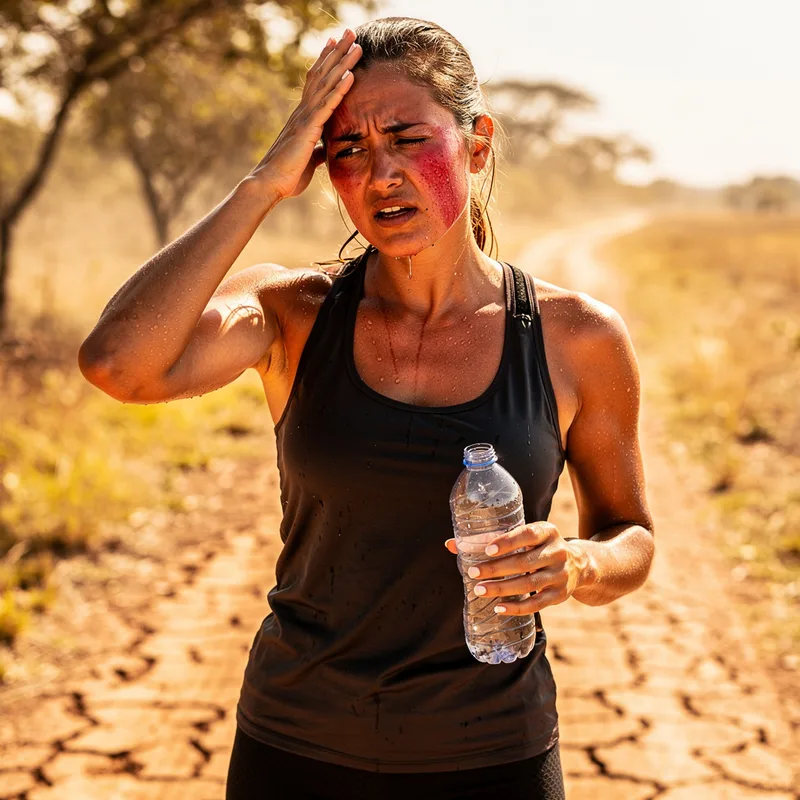
dehydration
 37
3.8
37
3.8

- noun
- /ˌdiːhaɪˈdreɪʃən/
- Vomiting can quickly lead to dehydration, especially with very young children.
- signs of dehydration
- prevent dehydration
- risk of dehydration
Loading YouTube…
Watch on YouTubeMany of those had died from the fighting, from starvation, from dehydration, disease, or had simply deserted.
- Many of those had died from the fighting, from starvation, from dehydration, disease, or had simply deserted.
- They were subjected to rape, to starvation, to dehydration.
- We are talking Sahara Desert dehydration.
- A lot of times your bad breath is simply caused by dehydration.
- Even minor dehydration makes you more tired, less focused, more able to, you know, blood sugars are higher.
- And then there are occlusives which sits on top of the skin and basically prevent your skin from losing water, prevents dehydration.
- They also said to keep up his fluids, look out for dehydration and you can also give your baby paracetamol or ibuprofen, not both at same time.
- So frequent that people end up losing weight, getting dehydration or even malnutrition.
- First one to die from dehydration wins.
- And so you just like the, the, the exhaustion, the dehydration and the the altitude.
Examples
-
She's suffering from exposure, dehydration, and sunburn.
-
Quick, what are the warning signs of dehydration again?
-
So this is a powerful hedge against dehydration as well.
-
Dehydration is one of the leading causes of death when people are in emergency situations.
-
People with dementia can be particularly at risk of dehydration if ward environments are hot and dry.
Academic text (2010) -
Mentes offers many strategies for preventing dehydration for nursing home patients who are extremely vulnerable to dehydration.
Academic text (2006) -
When severe dehydration is present, hospitalization may be necessary, but most mild dehydration is manageable.
Academic text (2007) -
If you do not drink enough water, you may experience dehydration, which can cause dizziness.
-
Signs of dehydration include extreme thirst, dizziness, and confusion.
-
When hiking in hot weather, it's important to stay hydrated to prevent dehydration.
Antonyms
How Dehydrated
37
3.8
 14
3.7
14
3.7
Surface Forms
Morphology
dehydration = dehydrate (semi-transparent) = de + hydr + ate + ion
The noun is a regular and readily interpretable process-or-state formation from the verb 'dehydrate'.
Etymology
Dehydration comes from the parts de- 'remove' and hydr- 'water', so it means losing water from the body. Think of it as the opposite of hydrate: when your body loses too much water you feel thirsty, dizzy, or confused.