
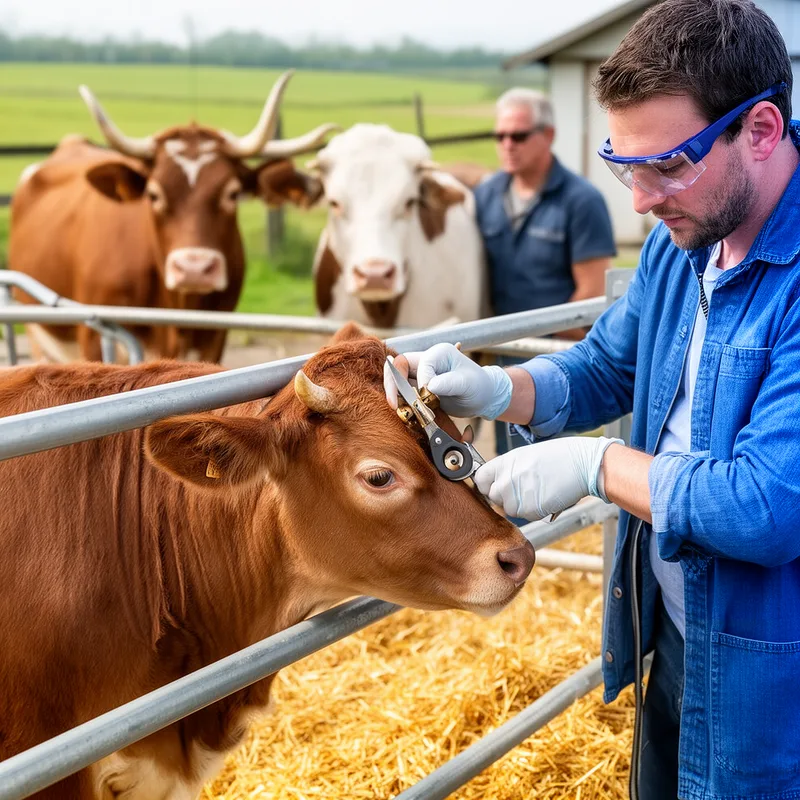
dehorning


 1
5.6
1
5.6
- noun
- /dɪˈhɔrnɪŋ/
- Specialized
 :
descuernado
:
descuernado
- Proper equipment is essential for safe and humane dehorning procedures.
Examples
-
The process of dehorning is essential for ensuring the safety of livestock and handlers.
-
The dehorning procedure is essential for safety.
-
The veterinarian explained the benefits of dehorning to the new cattle owners.
-
Many farms schedule dehorning when calves are still young to reduce stress.
-
Farmers often perform dehorning to reduce injuries.
-
Farmers regularly practice dehorning to improve safety and management of their livestock.
-
The veterinarian explained that dehorning helps prevent fights between animals in the herd.
Antonyms
Surface Forms
Morphology
Etymology
The word dehorning uses the prefix de- meaning 'remove' or 'off', the same de- you see in defrost, and the word horn, the hard point on an animal's head. So dehorning simply means taking off an animal's horns, which farmers do to keep animals and people safe.