
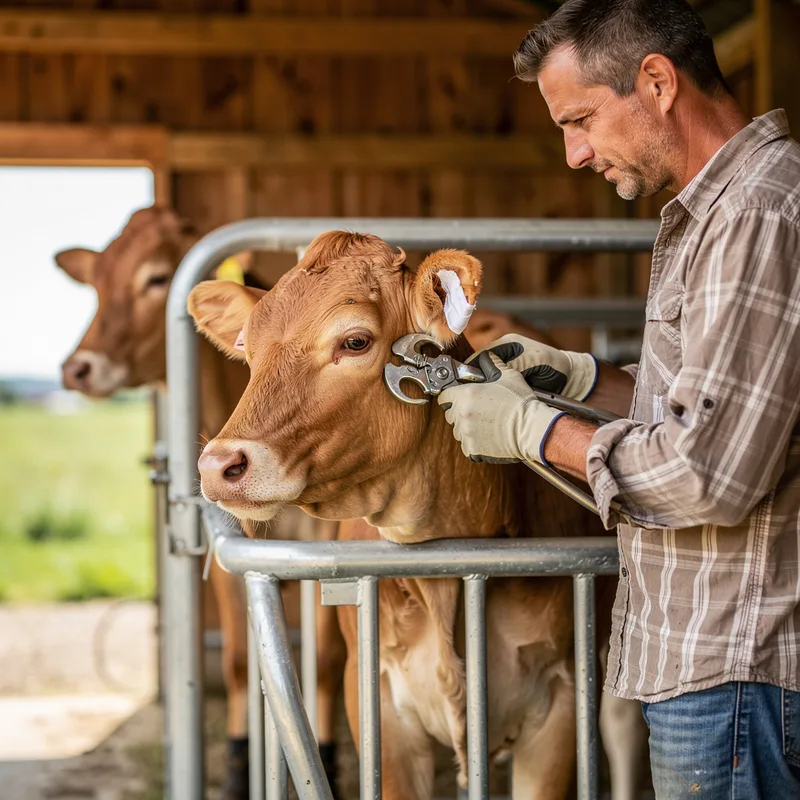
to dehorn
 1
8.1
1
8.1

- verb
- /diːˈhɔrn/
- Specialized
 :
descuernar
:
descuernar
- The farmer decided to dehorn the calves to ensure safety for both the animals and the handlers.
- dehorn a rhino
Examples
-
The others, the ones who are slaughtered—they're dehorned steers, you know; they aren't intelligent!" p151
Fiction book (1991) -
When the males mature, they have to be castrated and dehorned; that's the rule.
Fiction book (1991) -
'Somebody ought to dehorn that rotten son of a bitch! '
-
Just dehorn it, wipe its butt and send it in.
-
It is an adult male, but neither castrated nor dehorned.
Fiction book (1991) -
The young males brought in to be castrated and dehorned were just as unquestioningly cooperative.
Fiction book (1991) -
I don't want P100 Thrayl dehorned, turned into meat—or breeding stock, either.
Fiction book (1991) -
To minimize injuries among livestock, many ranchers choose to dehorn their cattle at a young age.
-
As part of the conservation effort, the team worked to dehorn the rhinos and reduce the threat of poachers.
Synonyms
To remove the small horn buds on a young animal to stop horns growing
How Complete

Surface Forms
Morphology
Etymology
Dehorn combines the prefix de- meaning 'remove' and the word horn, so to dehorn an animal is to take away its horns or stop them from growing, exactly what farmers do for safety.