
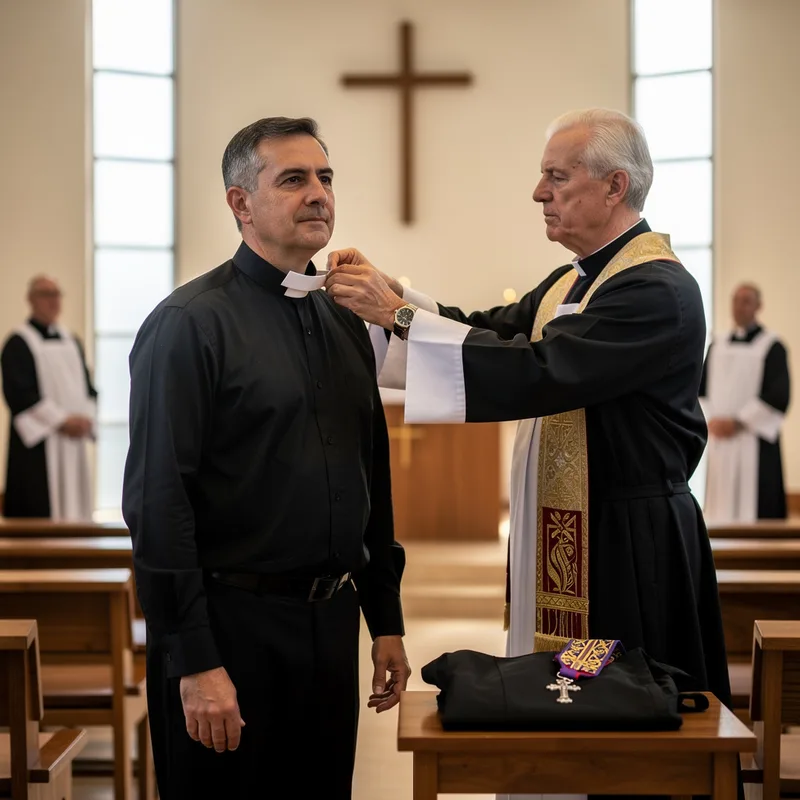
to defrock
 6
9.1
6
9.1

- verb
- /dɪˈfrɑk/
- Formal
- A defrocked Cistercian, he was a member of the List Society who developed an even more idiosyncratic version of neopaganism.
- defrocked priest
- defrocked Catholic
Loading YouTube…
Watch on YouTubeSo part of my mission now is to defrock cynicism and take away some of its shine in our cultural landscape.
- So part of my mission now is to defrock cynicism and take away some of its shine in our cultural landscape.
Examples
-
However, we are told that he was subsequently defrocked.
-
And they defrocked me!
-
And of course I assumed I would be defrocked.
-
They should defrock him or disbar him, or whatever they do.
-
And that pastor should be condemned by his colleagues and defrocked.
Blog text (30) -
This man is a menace to the Church, and must be defrocked and excommunicated!
-
Why were you defrocked?
Fiction book (1991) -
Priests, even defrocked priests, don't go in for hocus-pocus.
Fiction book (1991) -
I repeat, the Pope did not demote or defrock the disgraced Cardinal Law; he rewarded him with a cushy, prestigious new job.
Blog text (19) -
The bishop decided to defrock the priest after the allegations came to light.
Synonyms

 1
9.9
1
9.9
Officially say that a place such as a church or altar is no longer holy

To officially remove a priest from church duties for bad behaviour
Antonyms


How Severe
- Formal
24
9.3

- Formal
6
9.1
- Formal
289
4.2
- Formal
26
7.7
- Formal
33
6.1
Surface Forms
Morphology
Etymology
Defrock comes from the parts de- meaning 'off' and frock meaning 'robe', so it originally meant to 'take off the robe'. That's why to defrock a priest is to take away their official robe, role, and rights in the church.