
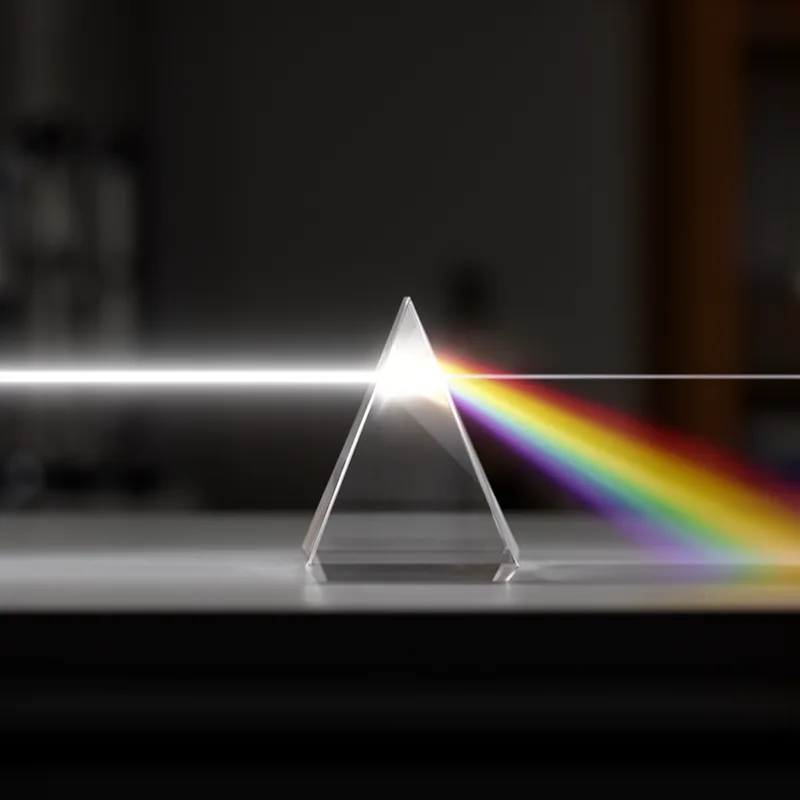
deflection


 1
7.2
1
7.2
- noun
- /dɪˈflɛkʃən/
- Specialized
- And scattering is the deflection of the light through a certain angle.
- deflection of light
Examples
-
That's 'cause you always think of deflection as a change in the sideways in the vector, right?
-
The same technique was used at Uranus to aim the spacecraft so accurately that the deflection of its trajectory caused by the planet's gravity would send it on to Neptune (which in 1989 was the most distant planet from the Sun).
Academic text (1990) -
Your eye is now outside the maximum deflection angle of all of the colors.
-
So low angle deflection means low energy emission.
-
Those are all deflections at different angles.
-
The deflection of microwaves from quasars by the Sun was also shown to agree with the theory to 1%.
Academic text (1994) -
Several experiments, in particular that of Heinrich Hertz, had failed to observe the deflection of cathode rays by an electrostatic field.
Academic text (1997) -
The theoretical problems this year dealt with the electric field in the Earth's atmosphere, the laser forces on a transparent prism, and the deflection of an electron beam by a charged wire.
Academic text (1993) -
The deflection angle Phi is proportional to the wavevector of the acoustic wave, which is perpendicular to the incident photon wavevector.
Academic text (1995) -
The deflection of the laser beam caused it to miss the target.
Synonyms
 10
2.1
10
2.1
A change that makes something curve from being straight
 4
6.8
4
6.8
A bend in a line or path that changes direction

The amount something moves away from its original position
Antonyms


Compounds

- Specialized
Light rays bend when they pass through different materials or around objects


Surface Forms
Morphology
deflection = deflect (semi-transparent) = de + flect + ion
Standard noun formation from 'deflect'; here it refers to a wave's being turned from its original path.
Etymology
Deflection comes from the Latin parts de- 'away' and flectere 'to bend', the same root as flex, which means 'to bend'. Think of a wave or beam being 'bent away' from its path, which is why scientists call that change a deflection.