
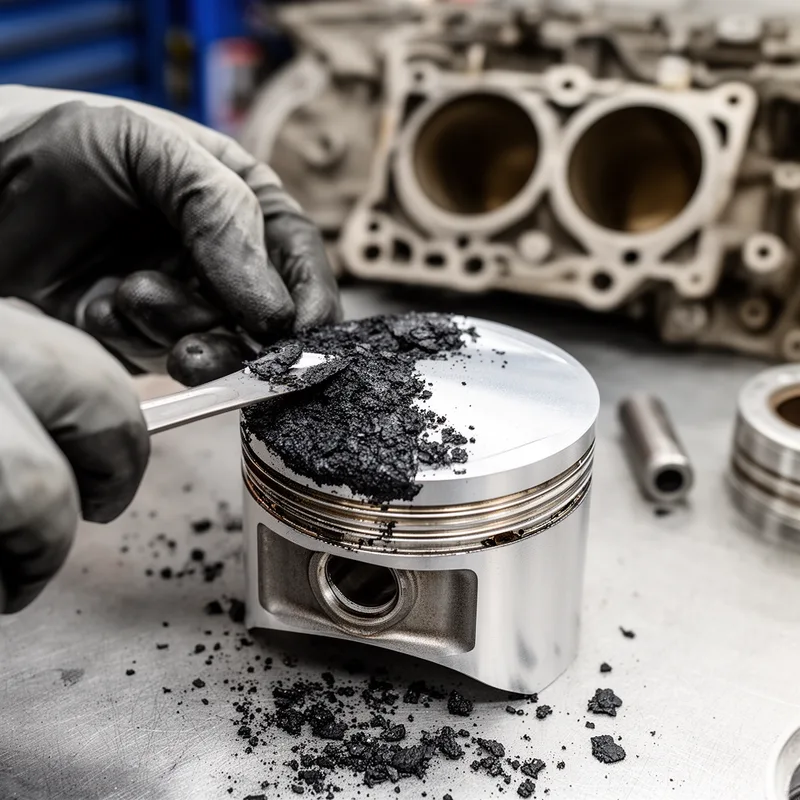
to decarbonize
- verb
- /diːˈkɑːrbənaɪz/
- Specialized
- The mechanic had to decarbonize the engine to restore its performance.
Examples
-
It's important to decarbonize your lawn mower regularly for optimal functioning.
-
The mechanic suggested that I decarbonize my car regularly.
-
After years of use, the old car needed to be decarbonized to remove built-up deposits.
-
We need to decarbonize our engines to improve efficiency.
-
After years of use, the old car needed to be decarbonized to remove built-up deposits.
-
The mechanic had to decarbonize the engine to restore its performance.
-
It's important to decarbonize your lawn mower regularly for optimal functioning.
Synonyms
To remove carbon deposits from the inside of an engine
To remove carbon from metal parts so they work better
Surface Forms
Morphology
Etymology
Decarbonize comes from de- meaning 'remove' and carbon from an old word for 'coal' or 'charcoal'. So to decarbonize an engine is to take away the black carbon deposits that build up and make it run better.

