
to decarbonize


 1
7.2
1
7.2
- verb
- /diːˈkɑːrbənaɪz/
- Specialized
- Countries around the world must decarbonize their energy systems to mitigate climate change.
- decarbonize the economy
- decarbonize electricity generation
- decarbonize electricity
Loading YouTube…
Watch on YouTubeSo we've seen it's possible to decarbonise even large economies without sacrificing prosperity.
- So we've seen it's possible to decarbonise even large economies without sacrificing prosperity.
- We have to decarbonise those uses of energy through various different means.
Examples
-
And we need to, you know, decarbonize in the long term and through gradual policy mechanisms like a carbon price.
-
Overall, the world is generally decarbonizing by switching to cleaner and more efficient gas, which is probably good for global warming and many other energy-related environmental issues.
Academic text (1994) -
So we really need to look at the long term ways of decarbonize our campus.
-
So essentially, you know, in theory, it's a good thing to decarbonize the world, correct?
-
We have to decarbonise those uses of energy through various different means.
-
So we've seen it's possible to decarbonise even large economies without sacrificing prosperity.
-
To achieve net-zero emissions by 2050, businesses will need to decarbonize their operations significantly.
-
Governments are implementing policies that encourage industries to decarbonize and invest in renewable energy sources.
Surface Forms
Morphology
Etymology
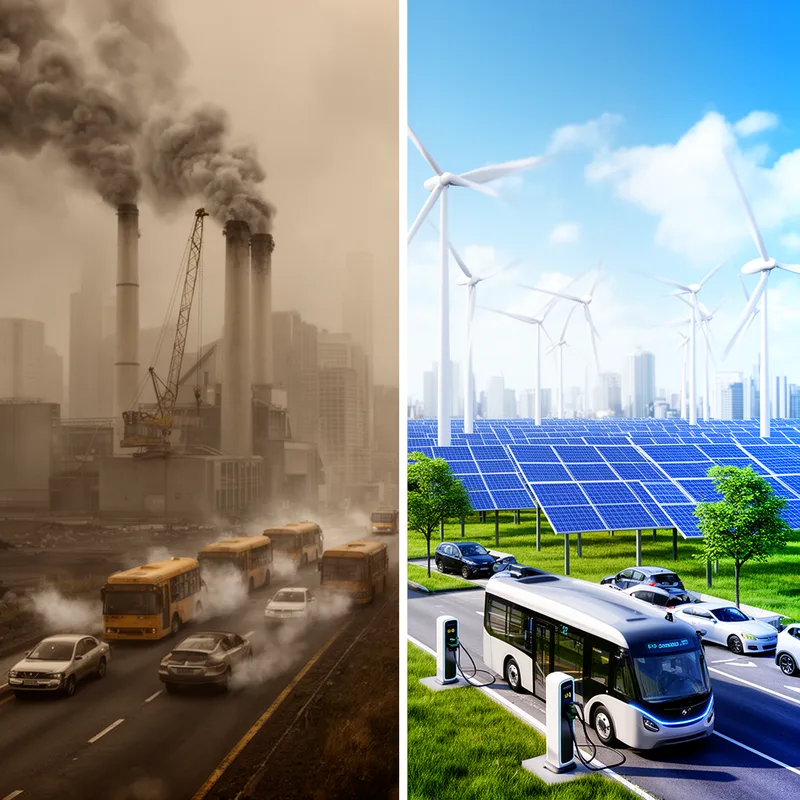
Decarbonize also uses de- meaning 'remove' and carbon, the same root in 'carbon dioxide' and 'charcoal', so a helpful image is cleaning the black soot out of a city or industry. That's why to decarbonize a system means to cut or remove carbon emissions and make it cleaner for the climate.