
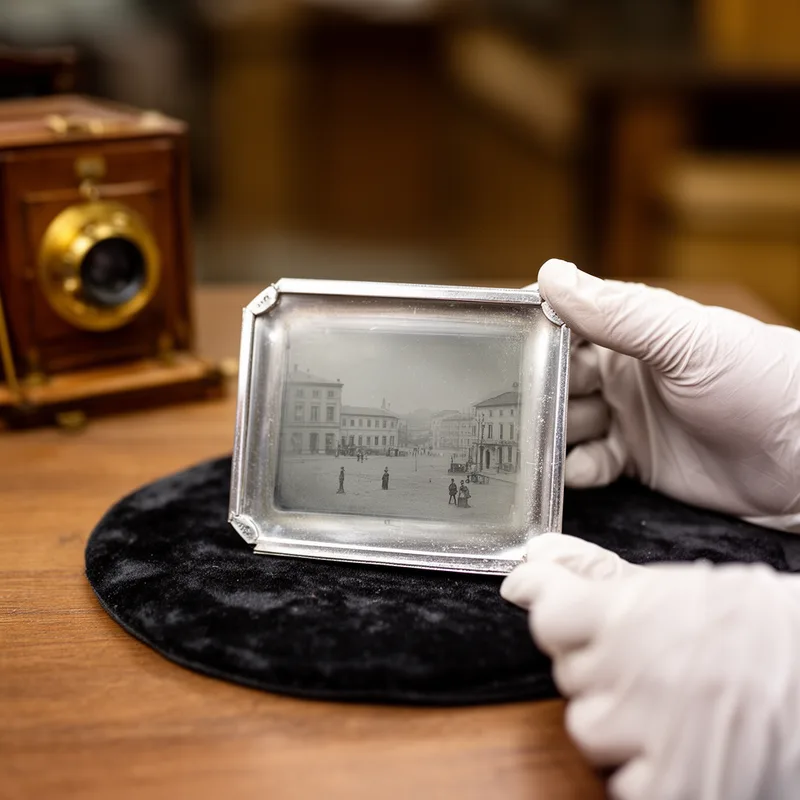
daguerreotypy
- noun
- /dəˈɡɛrəˌtɑpi/
- Archaic
- Collectors value each daguerreotypy for its historical significance and unique appearance.
Examples
-
Experts carefully restored the faded daguerreotypy to reveal the faces of the people in the portrait.
-
The museum displayed several stunning daguerreotypies from the 19th century.
-
The museum displayed a rare daguerreotypy of the city's main square from 1842.
-
Have you ever seen a daguerreotypy in person?
-
The museum displayed a rare daguerreotypy of the city's main square from 1842.
-
Experts carefully restored the faded daguerreotypy to reveal the faces of the people in the portrait.
-
Collectors value each daguerreotypy for its historical significance and unique appearance.
Synonyms

An early photograph that is on a glass plate from the 1800s

An early way of making photographs on paper coated with chemicals that react to light
How Old-Fashioned


Surface Forms
Morphology
daguerreotypy = daguerreotype (opaque) = daguerreo + type
The meaning is opaque as it relies on historical knowledge of the daguerreotype process.
Etymology
Daguerreotypy comes from the name Daguerre, the French inventor who first made this kind of photograph, and the ending -type, which means 'image' or 'impression'. So a daguerreotypy is a photograph made by Daguerre's special process, which is why these pictures are tied to that early method.