

cytoplast
- noun
- /ˈsaɪtəˌplæst/
- Specialized
- To create a hybrid cell, scientists fused a donor nucleus with a cytoplast from another cell.
Examples
-
The cytoplast is used in somatic cell nuclear transfer techniques in genetic research.
-
When the cytoplast is separated from the nucleus, the resulting structure can still support some cellular functions.
-
The cytoplast contains various organelles.
-
Plant cells have a large cytoplast.
-
The cytoplast is essential for maintaining the cell's structure and function, excluding the nucleus.
-
Researchers studied the cytoplast to better understand how cellular components interact.
-
In plant cells, the cytoplast plays a crucial role in photosynthesis and nutrient absorption.
Synonyms
 4
5.2
4
5.2

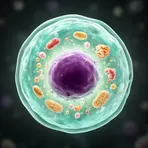
A jelly-like material inside a cell outside the nucleus that holds small parts and liquids
Surface Forms
Morphology
cytoplast = cytoplasm (opaque) = cyto + plast
Built from technical combining forms related to cell structure, which are not standalone words for average learners, so the relation to 'cytoplasm' is not transparently productive.
Etymology
Cytoplast comes from Greek parts cyto- meaning 'cell', as in cytoplasm, and -plast meaning 'formed' or 'molded', like in plastic. So a cytoplast is the 'formed part of a cell' — the cell membrane and cytoplasm without the nucleus, which is why the word is used for a cell missing its nucleus.