
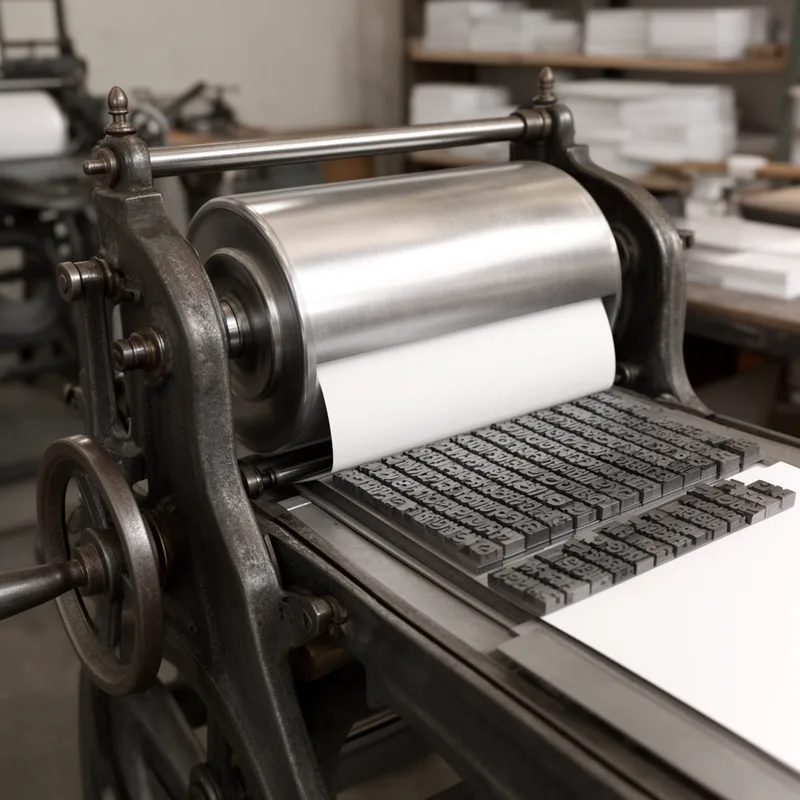
cylinder press
- noun
- /ˈsɪlɪndər prɛs/
- Archaic
- The Otago Daily Times upgraded its printing plant in 1862 with a modest two-cylinder press, the first steam press in New Zealand.
Examples
-
The printer decided to invest in a new cylinder press to enhance the efficiency of their printing operations.
-
The industrialization of papermaking and the use of iron cylinder presses harnessed to steam (first used by the London Times in 1814) provoked much comment.
Academic text (1995) -
Using a cylinder press, the company was able to produce high-quality prints at a faster rate.
-
The design of the cylinder press allows the paper to roll over the type evenly, ensuring a clear and crisp image.
Synonyms
 23
3.1
23
3.1

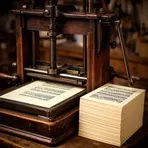
A machine that makes many copies of pages with text or pictures on paper
 1
2.8
1
2.8
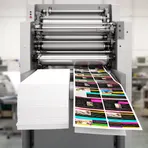
A machine that puts words and pictures onto paper

A machine that prints many pages quickly using a turning metal drum
Surface Forms
Morphology
The meaning is directly compositional: it refers to a press that uses a cylinder component, which a learner can infer from 'cylinder' (a round/rolling element) + 'press' (a device applying pressure). There is no idiomatic or metaphorical shift, and the construction follows straightforward, cross-linguistically common naming patterns for machines.
Etymology
Cylinder press comes from an early printing machine where a round cylinder rolled over a flat bed of inked letters to press the picture onto paper. That image of a rolling cylinder pressing the paper is why the machine is called a 'cylinder press' today.