
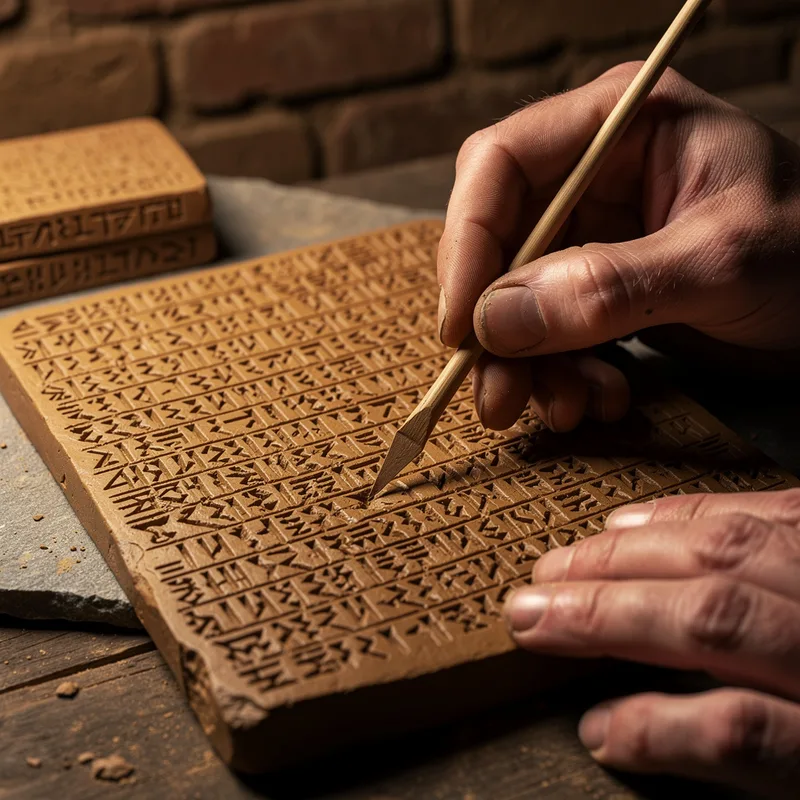
cuneiform
 4
9.9
4
9.9

- noun
- /ˈkjuːnɪfɔːrm/
- Specialized
- Archaeologists discovered a cuneiform inscription on a clay tablet during the excavation.
- cuneiform tablets
Loading YouTube…
Watch on YouTubeThe four that remain are ancient cuneiform, ancient Sanskrit, Arabic still used today, and Hebrew that's still used today.
- The four that remain are ancient cuneiform, ancient Sanskrit, Arabic still used today, and Hebrew that's still used today.
Examples
-
The museum boasted eighty thousand tablets full of cuneiform, the oldest known form of writing.
Academic text (2003) -
But nevertheless, this piece of cuneiform inscription is a remarkable thing.
-
It's written in some kind of cuneiform.
-
It's a modern version of cuneiform on clay tablets.
Blog text (23) -
Today we're doing the oldest number system in the world, Babylonian cuneiform numbers.
-
We know this from a star list written in cuneiform on a clay table dated to around 700 BC.
Academic text (1990) -
Cuneiform tablets, cylinder seals, and other small antiquities that are more difficult to trace were sold openly.
Academic text (2003) -
After painstaking work, Marilyn found one that read "Tupkish, king of Urkesh" in cuneiform script from approximately 2300 B.C.
Academic text (2008) -
The museum displayed a collection of ancient cuneiform tablets from Mesopotamia.
-
Scholars have been able to translate many ancient texts written in cuneiform, shedding light on early civilizations.
Compounds

Surface Forms
Morphology
Etymology
Cuneiform comes from the Latin cuneus meaning 'wedge' and -form meaning 'shape'. Ancient writers pressed a small pointed tool into clay to make wedge marks, so cuneiform names that 'wedge-shaped' writing.