
cubic boron nitride
- noun
- /ˈkjuːbɪk ˈbɔːrɒn naɪˈtraɪd/
- Specialized
- Tests at three of the nation's leading research institutions confirm that General Motors Research Laboratories (GMR) has developed a process for growing thin films of cubic boron nitride on silicon.
Examples
-
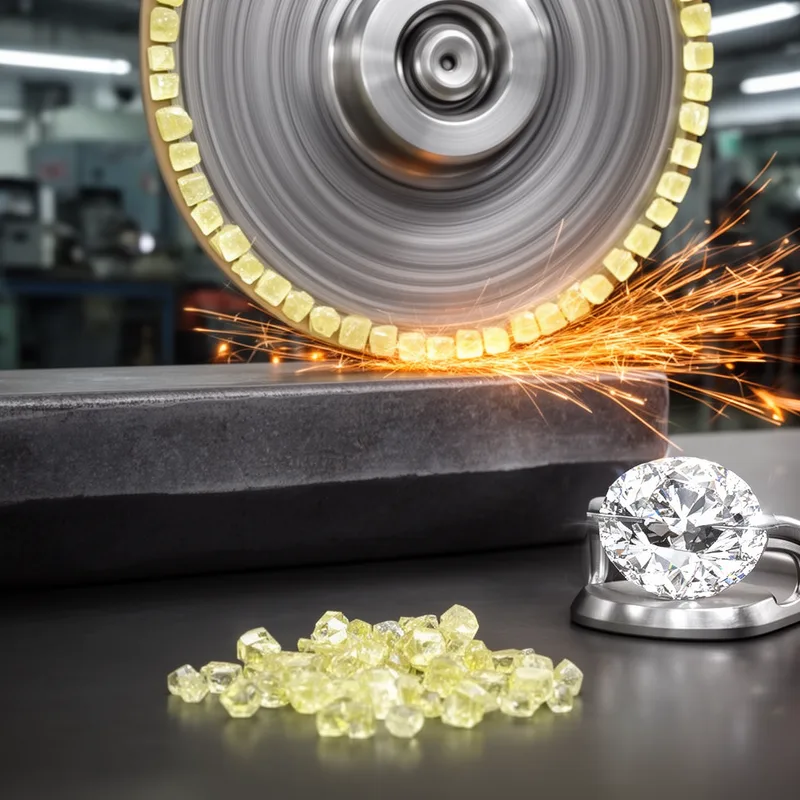
The manufacturing process of cubic boron nitride ensures its durability for heavy-duty applications.
-
According to Dr. Jeffrey A. Sell of the GMR Physics Department, "Next to diamond, cubic boron nitride is the hardest material known to man."
Academic text (1990) -
PHOTO (BLACK & WHITE): Dr. Gary L. Doll, left, and Dr. Jeffrey Sell of the General Motors Research Laboratories prepare the vacuum chamber that they use to grow thin films of cubic boron nitride.
Academic text (1990) -
Cubic boron nitride is commonly used in industrial cutting tools due to its exceptional hardness.
-
Engineers prefer cubic boron nitride over diamond for cutting materials at high temperatures.
How Hard


Surface Forms
Morphology
The phrase transparently denotes a compound composed of boron and nitrogen with a cubic (crystal) form — a B1 learner who knows 'cubic', 'boron' and 'nitride' can infer composition and shape/structure. However, the specialized properties (extremely hard, synthetic, used as an abrasive and second only to diamond) are technical and not deducible from the constituents alone, so full meaning requires domain knowledge.
Etymology
Cubic boron nitride is named for what it is: the elements boron and nitride, where nitride means a 'form of nitrogen', are arranged in a box-like cubic crystal. Because this cube-like structure is 'very hard', it is used to cut and grind tough materials, so the name helps explain its use today.