
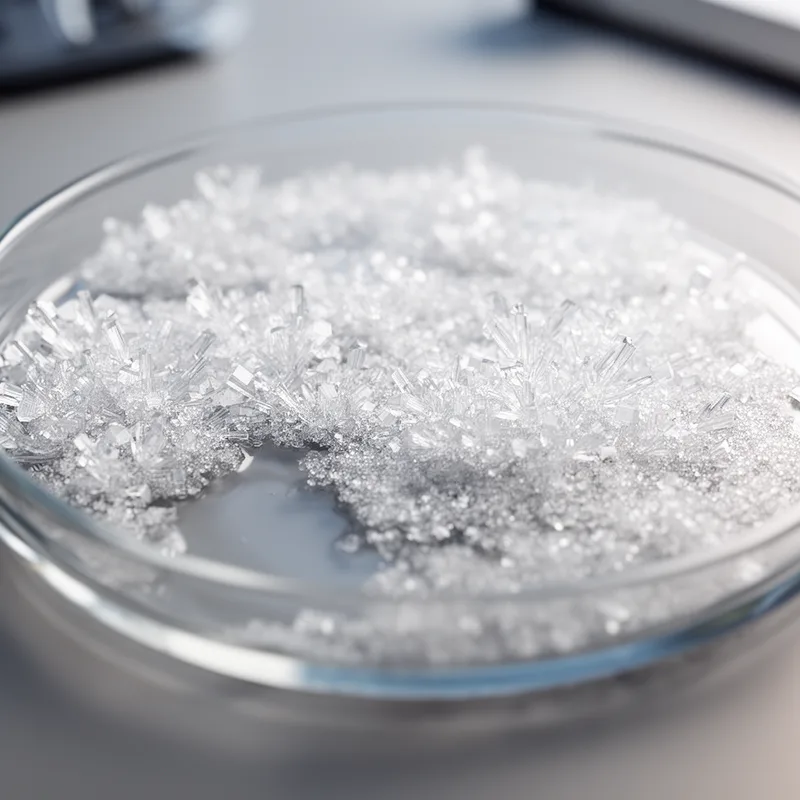
crystalloid
- adjective
- /ˈkrɪstəlɔɪd/
- The crystalloid structure of the mineral made it sparkle in the sunlight.
Examples
-
Researchers studied the crystalloid form of the compound to understand its properties.
-
In the laboratory, scientists often create crystalloid samples for analysis.
-
Colloid solutions theoretically provide a longer duration of plasma expansion compared with a similar volume of crystalloid solutions.
Academic text (2016) -
Decisions about the use of colloidal and crystalloid fluids and blood transfusion were made by each patient's attending anaesthetist or surgeon.
Academic text (1994)
Synonyms

 11
6.6
11
6.6

Made of many small solid parts that form regular shapes like salt or snow

A thing that has a regular repeating shape like salt or diamond

Very clear and bright like a piece of glass
How Crystalline

Surface Forms
Morphology
Etymology
Crystalloid comes from crystal and the ending -oid, which means 'like' or 'in the shape of'. So it simply means something that looks or has the form of a crystal, which helps you remember its use for crystal-like patterns or textures.