
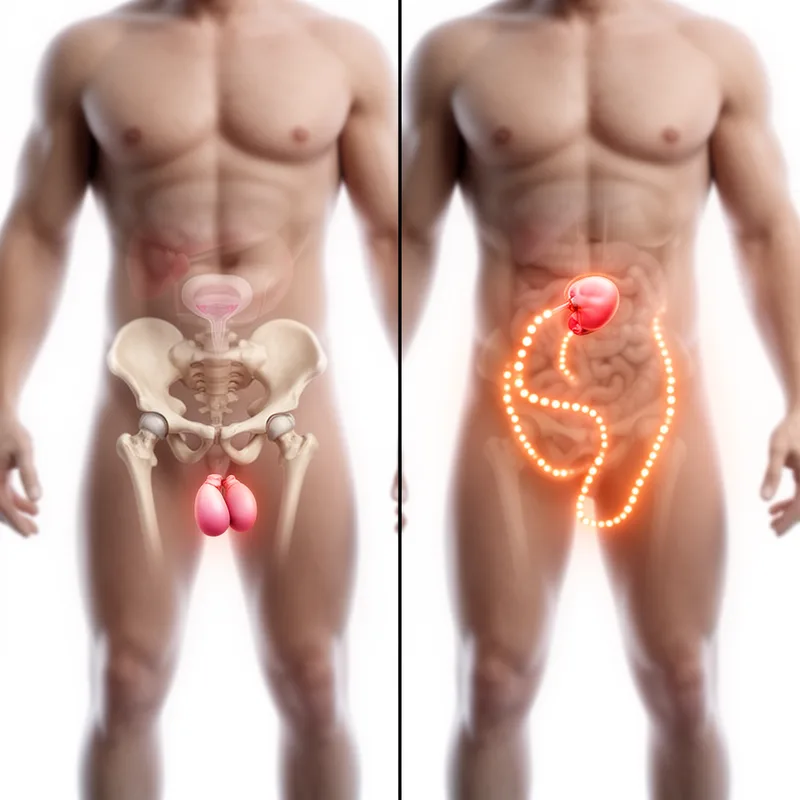
cryptorchism
- noun
- /ˌkrɪpˈtɔrkɪzəm/
- Specialized
- The pediatrician diagnosed the infant with cryptorchism after noticing an undescended testicle during the examination.
Examples
-
Surgery is often recommended to correct cryptorchism in young boys.
-
If left untreated, cryptorchism can increase the risk of infertility and testicular cancer.
-
He was diagnosed with cryptorchism at birth.
-
Many children with cryptorchism may require surgery.
-
The pediatrician diagnosed the infant with cryptorchism after noticing an undescended testicle during the examination.
-
Surgery is often recommended to correct cryptorchism in young boys.
-
If left untreated, cryptorchism can increase the risk of infertility and testicular cancer.
Synonyms


 1
9.9
1
9.9
One or both testicles do not move down into the scrotum before birth

A condition in which one or both testicles do not move down into the scrotum before birth
Surface Forms
Morphology
cryptorchism = cryptorchid (opaque) = crypt + orch + ism
The term is built from specialised Greek combining forms ('crypt-' 'orch-') plus '-ism', which are not readily interpretable by an average B1 learner, so the medical sense is not derivable from common English vocabulary.
Etymology
The word cryptorchism comes from two Greek parts: crypt- meaning 'hidden', like in cryptic, and -orch- meaning 'testicle', the same root as in orchid because the flower looks like a testicle. So cryptorchism describes a testicle that stays 'hidden' and does not move into the scrotum.