
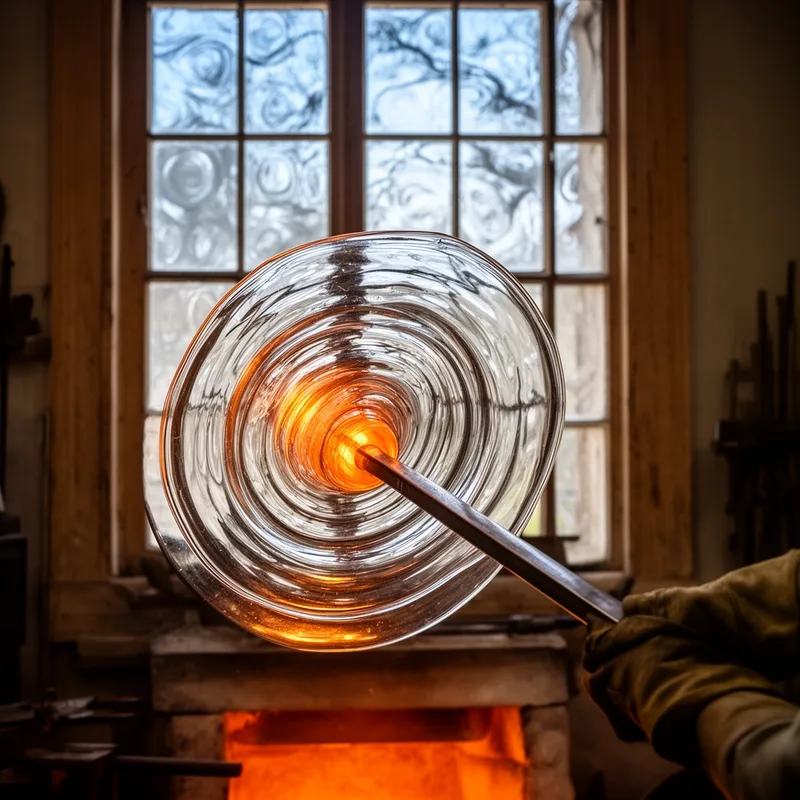
crown glass
- noun
- /kraʊn ɡlæs/
- Archaic
- Unlike modern plate glass, crown glass has small variations in thickness and clarity.
Examples
-
Historic buildings often feature crown glass in their original window panes.
-
The unique swirling patterns of crown glass make it highly prized by conservators.
-
The crown glass is beautiful.
-
The old church still has crown glass windows.
-
Many historic cathedrals feature crown glass in their stunning stained-glass windows.
-
The museum displayed a collection of antique crown glass pieces that date back to the 18th century.
-
Architects often prefer crown glass for restoration projects to maintain the historical integrity of old buildings.
Synonyms

 785
1.0
785
1.0

A hard clear material made from sand used for windows and bottles
Surface Forms
Morphology
The compound 'crown glass' clearly signals a type of glass (crown + glass), so a B1 learner who knows both words would likely infer it refers to a particular kind of glass. However, the specific production method (blown into a globe and spun into a disk) and historical window use are technical/historical details that are not predictable from the constituents alone. Because the basic category is transparent but the specialized sense is not fully derivable, this is best classified as semi-transparent.
Etymology
The noun crown glass comes from a way of making window panes: glassmakers blew a ball of hot glass and spun it into a flat disk with a raised center that looked like a crown, then cut panes from the clear outer part. So crown glass became the name for this old, slightly wavy window glass.