

creosote bush
 1
9.8
1
9.8

- noun
- /ˈkriːoʊsoʊt bʌʃ/
- US
- Most notable is creosote bush, Larrea tridentata, the dominant evergreen shrub of North American warm deserts.
- creosote bush grasshopper
- creosote bushes insects
- leaf surfaces of creosote bush
Examples
-
The creosote bush has branches that live up to 90 years!
Blog text (22) -
And there is one living creosote bush that is estimated to be nearly 12,000 years old.
Blog text (22) -
The leaves of the creosote bush are coated with a resin to prevent water loss in the hot desert.
Blog text (22) -
The resin of the creosote bush also protects the plant from being eaten by most mammals and insects.
Blog text (22) -
For example, cacti and agaves store water, while sagebrush has tiny leaves and creosote bush has waxy ones to slow transpiration.
Academic text (1995) -
The creosote bush thrives in dry desert conditions and has unique resinous leaves.
-
During our hike, we spotted a creosote bush covered in small yellow flowers.
-
Many desert animals find shelter beneath the creosote bush's dense foliage.
Synonyms

A desert shrub with small yellow flowers, commonly called the creosote bush

A desert bush with sticky, scented leaves and small yellow flowers
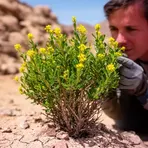
A desert shrub with sticky, scented leaves and small yellow flowers
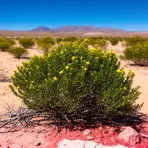
A group of evergreen shrubs that grow in South America and the southwestern United States, like the creosote bush
Surface Forms
Morphology
creosote + bush
If a learner knows 'creosote' (a tarry/resinous substance) and 'bush' (a small woody plant), they can compose the meaning: a bush characterized by creosote-like resin or smell. This is a straightforward noun–noun compound describing a plant with that property rather than an idiom, so it is compositional and transparent.
Etymology
Creosote bush is named for the sticky sap on its leaves that smells like creosote, the dark oil people used to protect wood. After rain the scent becomes very strong, so early visitors compared the plant to that oil and named it for the smell.