
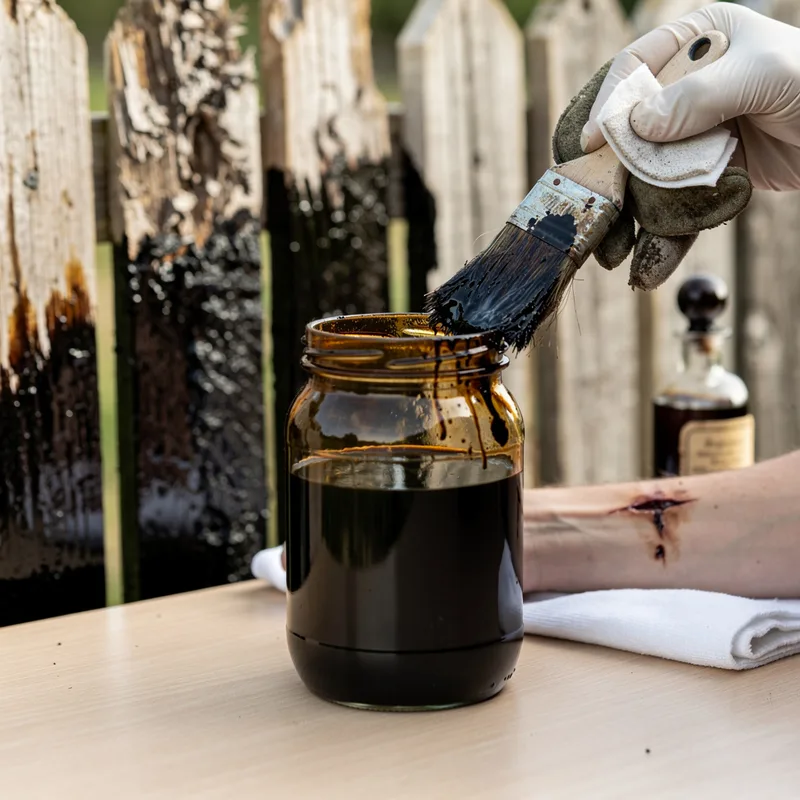
creosote
 4
9.0
4
9.0

- noun
- /ˈkriːoʊsoʊt/
- Specialized
- Many utility poles are dipped in creosote to prevent damage from termites.
Loading YouTube…
Watch on YouTubeThis is called creosote and creosote is so bad for you.
- This is called creosote and creosote is so bad for you.
Examples
-
The crawl space smelled of creosote, which my father had painted on the exposed wood of the porch's foundation.
Fiction book (1991) -
His clothes grew grimy with creosote, and his eyes stung and watered.
Fiction book (1998) -
The sole of this sneaker had creosote on it.
-
His shirt and hands were covered in creosote, the dark brown tar they painted on the telephone poles to preserve them.
Fiction book (2002) -
The train yard smelled suffocatingly of coal, creosote, and smoke.
Fiction book (2001) -
There is nothing but gnarled sage all around, and creosote and dust, and both of us are choking on the heat.
Fiction book (1998) -
The railroad ties are treated with creosote, but where the ties have cracked, termites have invaded untreated pockets of wood inside.
Academic text (2003) -
For example, cacti and agaves store water, while sagebrush has tiny leaves and creosote bush has waxy ones to slow transpiration.
Academic text (1995) -
Most notable is creosote bush, Larrea tridentata, the dominant evergreen shrub of North American warm deserts.
Academic text (1998) -
The old fence was treated with creosote to help preserve the wood from rotting.
Synonyms
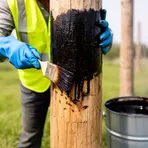
A dark oily liquid made from coal tar that protects wood from rot and insects
Compounds
 1
9.8
1
9.8
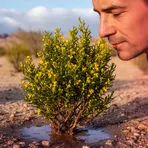
A desert shrub with sticky leaves that have a strong smell and small yellow flowers
- Specialized
A dark oily liquid made from coal tar that protects wood from rot and insects
Surface Forms
Etymology
The word creosote comes from the Greek parts kreos ('flesh') and sote ('to preserve'). Early scientists named it for its ability to stop decay in meat, and today creosote means the dark, oily preservative used to protect wood.