
cranial index
- noun
- /ˈkreɪniəl ˈɪndɛks/
- Specialized
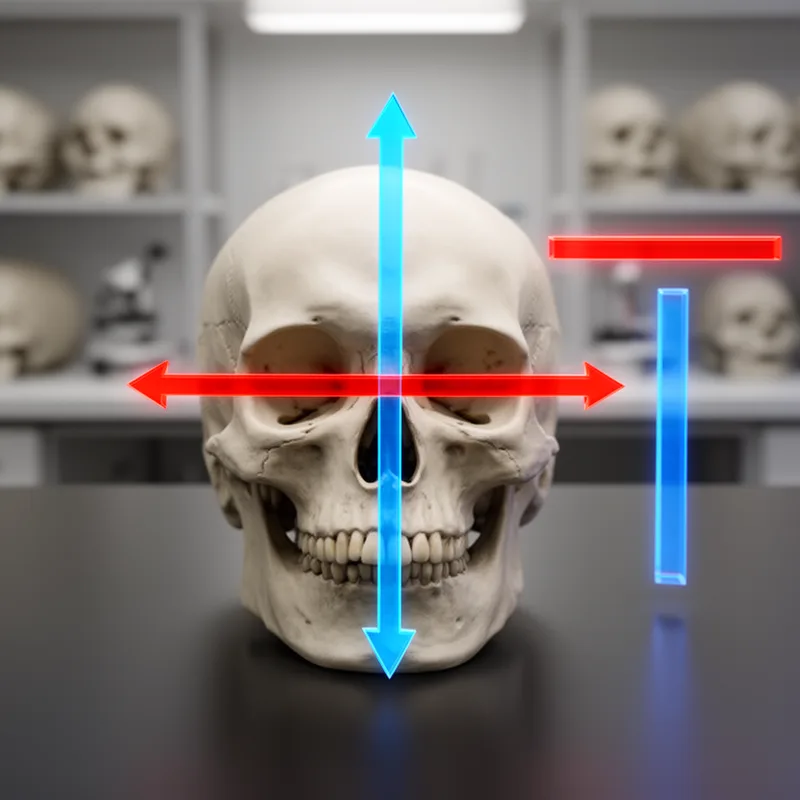
- A high cranial index suggests that the skull is relatively broad compared to its length.
Examples
-
Anthropologists often use the cranial index when studying human evolution and variation.
-
The scientist calculated the cranial index of the fossil to determine its classification.
-
The cranial index of the specimen was measured carefully.
-
Researchers calculated the cranial indexes of various species.
-
Anthropologists often use the cranial index to classify different skull shapes in their studies.
-
A high cranial index indicates that a skull is broader relative to its length, helping in anthropological classifications.
-
The researcher measured the cranial index to understand the relationship between skull shape and evolutionary traits.
Synonyms

The percent of a skull's width compared with its length used to describe skull shape

The skull's widest measurement as a percent of its longest measurement
Surface Forms
Morphology
The term transparently combines 'cranial' (relating to the skull) with 'index' (a numeric measure), so a B1 learner who knows both words would reasonably infer it is a numerical measure concerning the skull. However, the precise technical sense—specifically the ratio of maximum width to maximum length used to classify skull shapes—is specialized and not fully predictable from the constituents alone, making the expression only partially transparent.
Etymology
The phrase cranial index comes from the simple idea of measuring skulls: cranial means 'skull' and index means a number made from those measurements. They compare the skull's width to its length and turn it into a percentage, and that number shows the skull's 'shape', so the term refers to that measurement.

