
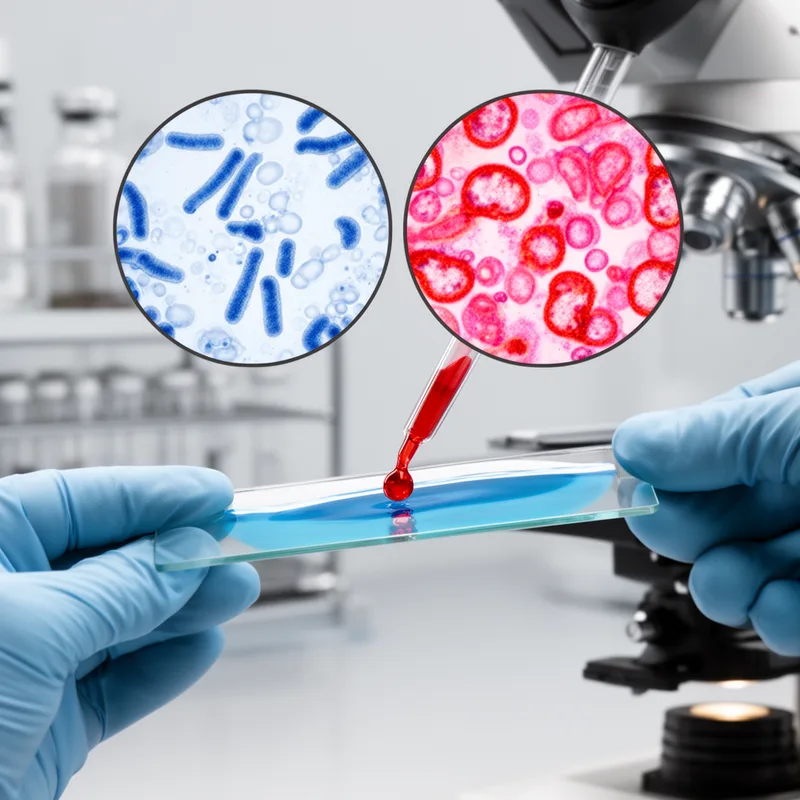
counterstain


 1
9.2
- noun
- /ˈkaʊntərˌsteɪn/
- Specialized
- Using a counterstain can reveal additional structures not shown by the main stain.
Examples
-
The scientist applied a counterstain to make the cell walls visible under the microscope.
-
After the primary stain, a counterstain helped differentiate the bacterial types.
-
The counterstain helps to reveal the cell structure.
-
A counterstain is often applied after the main stain.
-
In the microscopy lab, researchers applied a pink counterstain to highlight the bacteria in the sample.
-
The scientist added a green counterstain to the slides so that the structures could be easily observed under the microscope.
-
After using the primary stain, a blue counterstain was applied to differentiate the cells in the tissue section.
Synonyms
 3
6.5
A dye used to make parts of a sample visible under a microscope
 1
9.8
A chemical that glows under a microscope to stain cells

A red dye used to color cells or tissue for viewing under a microscope

A purplish-red dye used to color cells on microscope slides
A purple dye used to stain cells or tissue for viewing under a microscope
How Contrasting
- Specialized
1
9.2
 157
2.7
Surface Forms
Morphology
Etymology
Counterstain comes from counter ('against' or 'opposite') and stain ('a mark of color'). A counterstain is a second color put against the main stain so parts that did not show before stand out under the microscope, so the name tells you exactly what it does.