
cosmopolitan


 1
5.7
1
5.7
- adjective
- /ˌkɒzməˈpɒlɪtən/
- The Pacific's cosmopolitan today.
Examples
-
The Isotaceae are a small, cosmopolitan family of aquatic, heterosporous pteridophytes that are related to the extant Selaginellaceae and Lycopodiaceae families.
Blog text (27) -
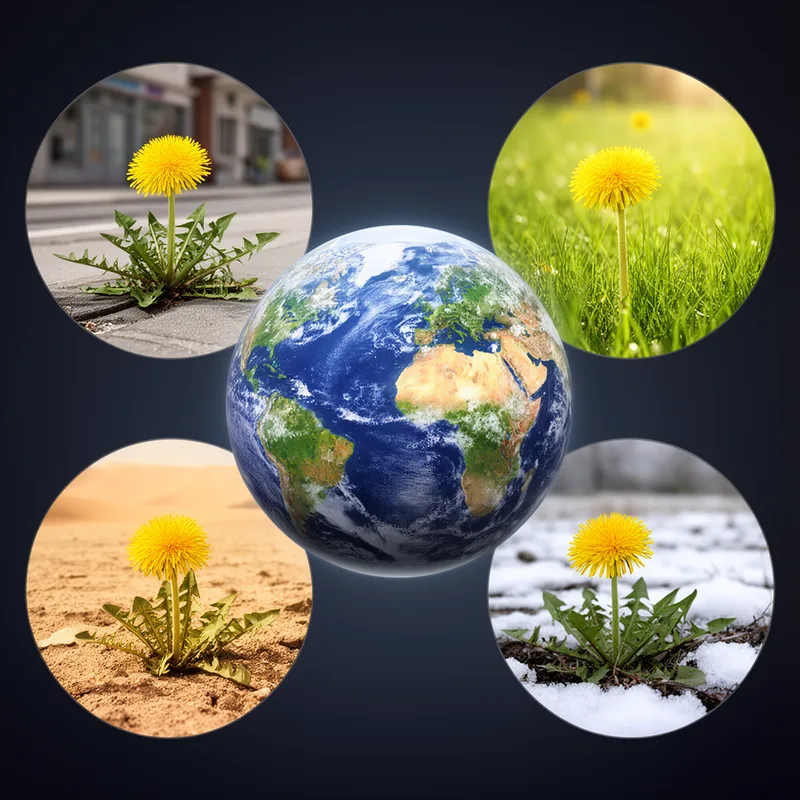
This plant species is cosmopolitan, as it can be found in various climates and continents.
-
So what does it mean for a species as cosmopolitan as the double-crested cormorant to be "overabundant"?
Academic text (2009) -
I too studied with the SSPX, this time in La Reja, and yes, they are incredibly rigid and not at all cosmopolitan.
Blog text (6) -
The old Bronze Age civilizations were quite cosmopolitan, in that artifacts and memes from the Middle East turned up in Sweden, and material from Afghanistan turned up in the Levant, and Cornish.
Blog text (28) -
For example, Strong et al. (1984) found that the cosmopolitan bracken fern (Pteridium aquilinum) has nearly four times as many consumers in Britain as in New Mexico (27 versus 7 species), although the environments are not equivalent.
Academic text (1996) -
The royal fern is remarkably cosmopolitan, thriving in both temperate and tropical regions around the world.
-
Dolphins are considered one of the most cosmopolitan animals, inhabiting oceans across the globe.
Synonyms
 4
2.9
4
2.9
Found in many parts of the world
Antonyms


Compounds

- Archaic
A person who has no permanent home and feels at home in many places
How Widespread

Surface Forms
Morphology
cosmopolitan = cosmopolite (semi-transparent) = cosmo + polit + an
The derivation is regular, but the distributional meaning in biology is a specialized extension rather than a fully literal composition.
Etymology
Cosmopolitan uses the same roots cosmo- 'world' and -politan 'citizen'. So a cosmopolitan plant or animal is one that exists in many parts of the world, not only in one region.