
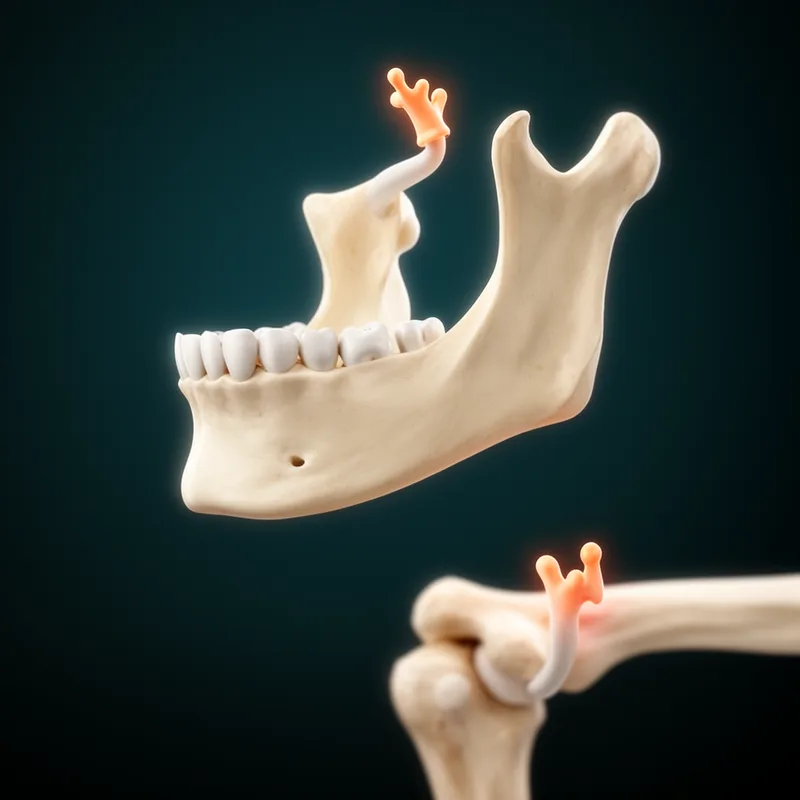
coronoid


 1
9.7
1
9.7
- adjective
- /ˈkɔːrəˌnɔɪd/
- Specialized
- Regan and Morrey (1989) have classified coronoid process fractures as follows:
- coronoid process
Examples
-
Type III is a fracture of the entire coronoid process.
Academic text (2003) -
Type II involves 50% of the coronoid process and may be associated with an unstable elbow.
Academic text (2003) -
An ulnar shaft fracture that begins near the area of the coronoid process and goes to the mid-shaft, in conjunction with the radial head dislocating, is known as a Monteggia fracture.
Academic text (2003) -
While the current study found that 46% of canine region, 18% of angle, 12% of condyle, 7% of dentoalveolar, 6% of symphysis region, 6% of body, 3% of ramus, and 2% of coronoid region mandible fractures in road traffic accidents.
Academic text (2007) -
The coronoid process of the ulna is essential for the proper articulation with the humerus during forearm movement.
-
During surgery, the surgeon carefully examined the coronoid process to ensure there was no damage to the surrounding structures.
-
Radiographic imaging revealed a fracture near the coronoid prominence, indicating the need for further intervention.
Compounds

- Specialized
A thin triangular part at the front top of the lower jaw where a chewing muscle attaches
- Specialized
A sharp triangular part that sticks out of a bone, for example the lower jaw or the ulna
Surface Forms
Morphology
coronoid = coron + oid
Although the adjective contains the familiar scientific suffix '-oid', the base 'coron-' is not a recognizable standalone English word for most learners and the specialized anatomical sense is not reliably inferable.
Etymology
Coronoid comes from an old Greek word corona meaning 'crown'. So coronoid means 'crown-shaped' or 'like a small crown', used to describe a hooked or crown-like part of a bone.