
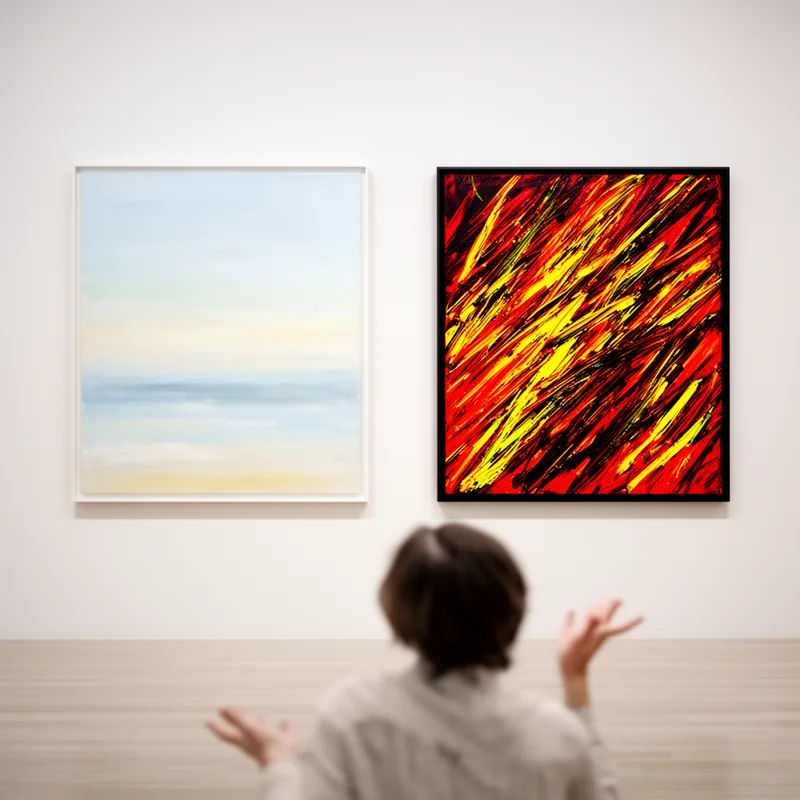
contrastiveness
- noun
- /kənˈtræstɪvnəs/
- Designers often use contrastiveness in colors to draw attention to important information.
Examples
-
The contrastiveness of the two paintings made them stand out in the gallery.
-
The contrastiveness between her calm voice and his loud tone was striking during the debate.
-
The contrastiveness of the two paintings is striking.
-
Does the contrastiveness in her writing enhance the story?
-
The contrastiveness of the two paintings made them stand out in the gallery.
-
Designers often use contrastiveness in colors to draw attention to important information.
-
The contrastiveness between her calm voice and his loud tone was striking during the debate.
Synonyms

 4
6.0
4
6.0

A quality that makes someone or something stand out from others
 3
4.5
3
4.5
A state when two things or people are not alike


 1
6.3
1
6.3
The fact that two things are not the same
 1
5.6
1
5.6
Being clearly different from others

A difference that shows two or more things are not the same

A clear difference between two or more things

Not being the same as another thing

A big difference between things that are not similar

How easy it is to see that something is different from others

A difference between people, groups, or places
How Different

Surface Forms
Morphology
contrastiveness = contrastive (transparent) = contrast + ive + ness
The noun is a straightforward nominalization of 'contrastive' with '-ness', so its meaning as 'the quality of being different or distinct' is directly derived.
Etymology
Contrastiveness comes from contrast, which comes from the old Latin contra meaning 'against'. The idea is things 'stand against' each other so you can tell them apart, so contrastiveness is how different two things are or how much they stand out when compared.