

contrast material


 1
4.4
1
4.4
- noun
- /ˈkɒntræst məˈtɪəriəl/
- Specialized
- With several different contrast materials injected into separate lactiferous sinus orifices, DCIS was confined to a single ductal system demarcated by one type of contrast (figure).
- injection of contrast material
Examples
-
The use of iodinated radiographic contrast material would have been impractical because of its high viscosity, the osmolarity of most of the agents, and the potential for a severe allergic reaction.
Academic text (1999) -
The results of a barium swallow examination suggested a small mucosal tear, although no extravasation of the contrast material was seen.
Academic text (2008) -
Knowing whether the osmolarity of the contrast material is high or low is not enough.
Blog text (3) -
Contrast material defines the duct containing DCIS (lower right).
Academic text (1999) -
The amount of ethanol used was approximately one-third the volume of contrast material necessary to define the lesion or a specific compartment.
Academic text (1998) -
Injection of additional contrast material (total volume: 40 ml) resulted in bulging of the tract.
Academic text (2008) -
With several different contrast materials injected into separate duct orifices, DCIS was confined to a single duct system.
Academic text (1999) -
PE was diagnosed if a central filling defect outlined by contrast material or complete occlusion was seen in a segmental or more proximal pulmonary artery.
Academic text (2002) -
The doctor explained that the contrast material would help create clearer images of the patient's internal organs during the scan.
-
During the procedure, we used a special contrast material that allowed for a more detailed examination of the tissues.
Synonyms
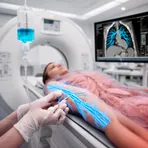
A liquid or dye used in medical scans to show parts inside the body, for example blood vessels
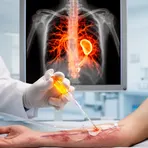
A dye that blocks X-rays to make organs or blood vessels visible on scans
Surface Forms
Morphology
The phrase is directly compositional: 'contrast' (difference in visual/brightness terms) + 'material' (a substance) yields 'a substance that produces or enhances contrast.' A B1 learner who knows both words can infer it refers to a substance used to create contrast in imaging, even if the technical detail about x-rays is specialized.
Etymology
The term contrast material comes from the simple image of adding a special material that makes parts of the body stand out on a scan, like using a highlighter on a page. That's why it means 'a substance given during an x-ray or scan to make organs or blood vessels easy to see'.